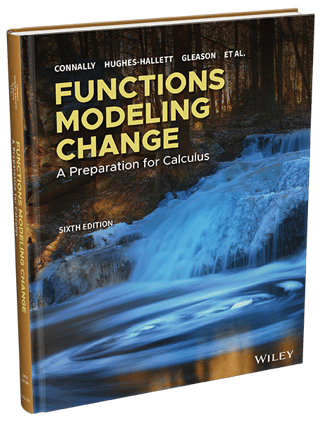
Functions Modeling Change: A Preparation for Calculus, 6th Edition
Authors: Eric Connally, Deborah Hughes-Hallett & Andrew M. Gleason
Grades 9–12
Course: AP® Precalculus (Conceptual Approach)
This accessible precalculus text includes concepts, examples, and problems focused on building a solid mathematical foundation through a smaller number of key topics. This emphasizes depth of understanding rather than breadth of coverage.
Chapters examine linear, quadratic, logarithmic, exponential, polynomial, and rational functions. They also explore trigonometry and trigonometric identities, plus vectors and matrices.
The program can be used as the core text to prepare students for success on the AP Precalculus exam.
NEW for Summer 2026, Interactive Editions offer enhanced features to support your classroom.
Assessment Builder
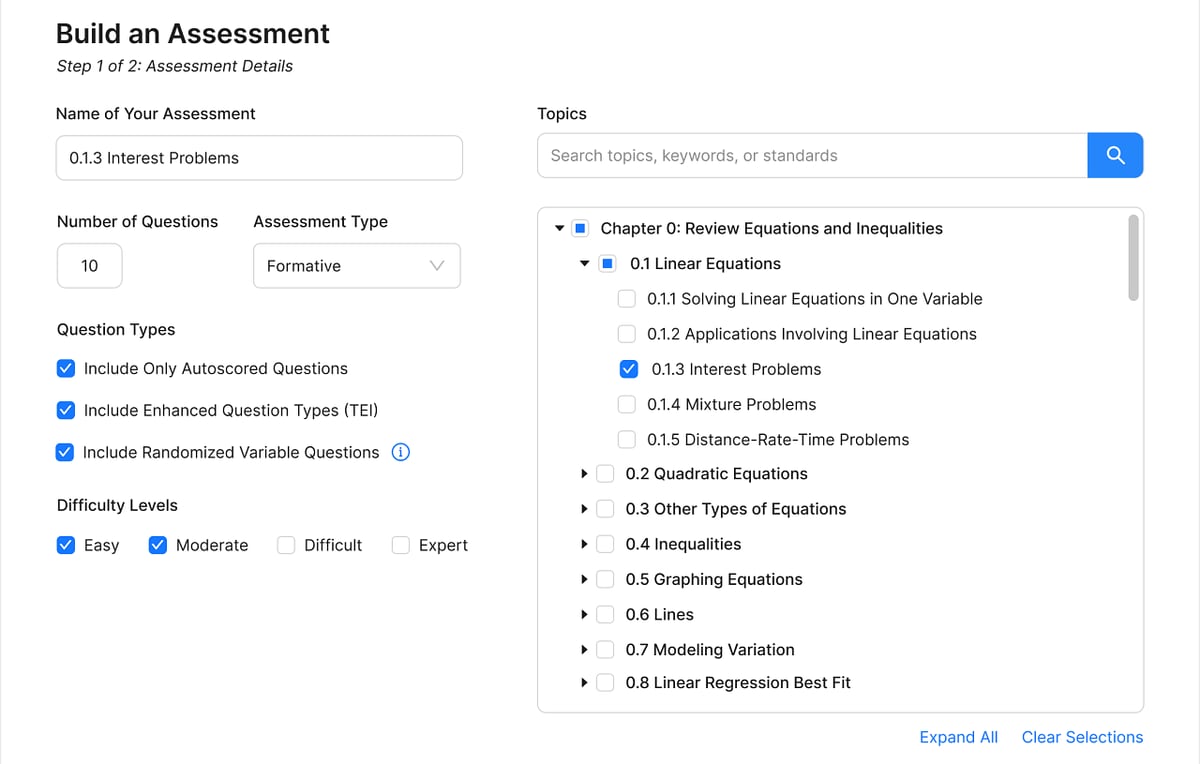
Quickly create customized assessments from a bank of ready‑made questions aligned to your course. Filter by topic and difficulty, reorder or regenerate questions, and then assign online for instant results or print for pencil‑and‑paper testing. Creating assessments specific for your classroom needs has never been simpler!
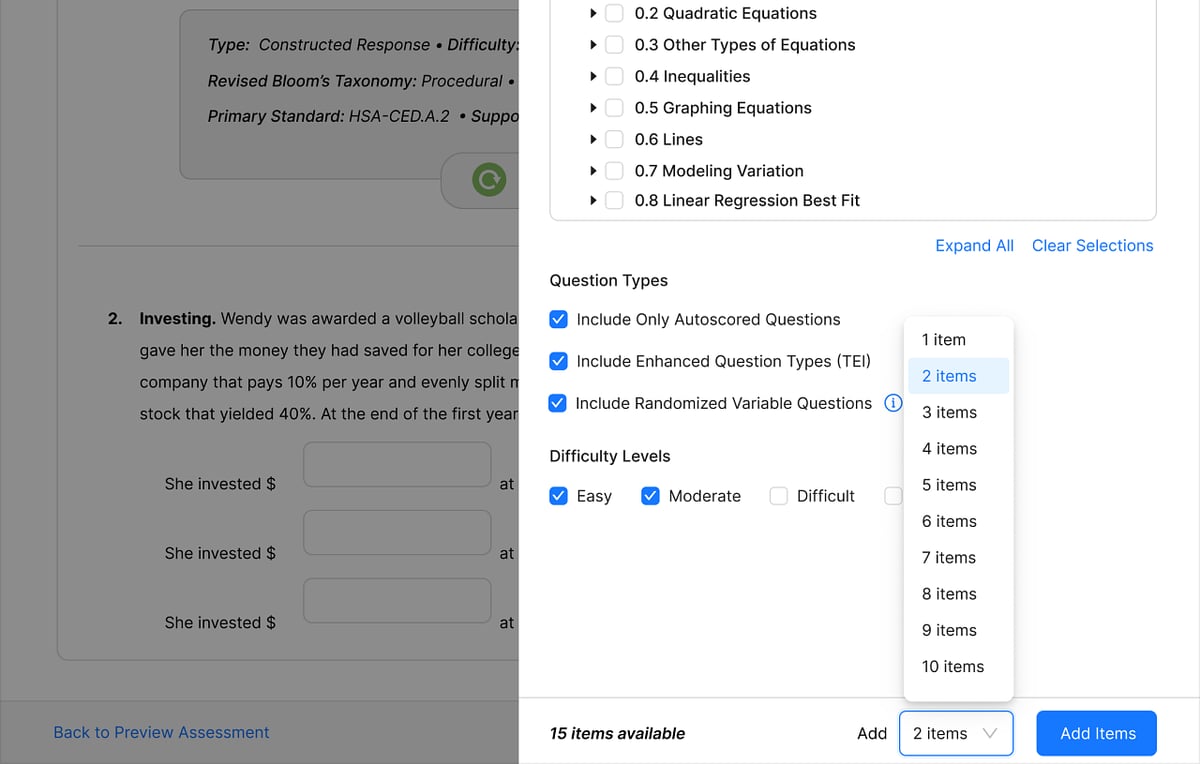
You also have the flexibility to build your own custom assessments from a bank of ready-made questions for your course.
Using the topic selector, simply choose the sections from the book you want to test, and the system will bring up related questions ready for you to use.
(Showing Wiley Precalculus as example)
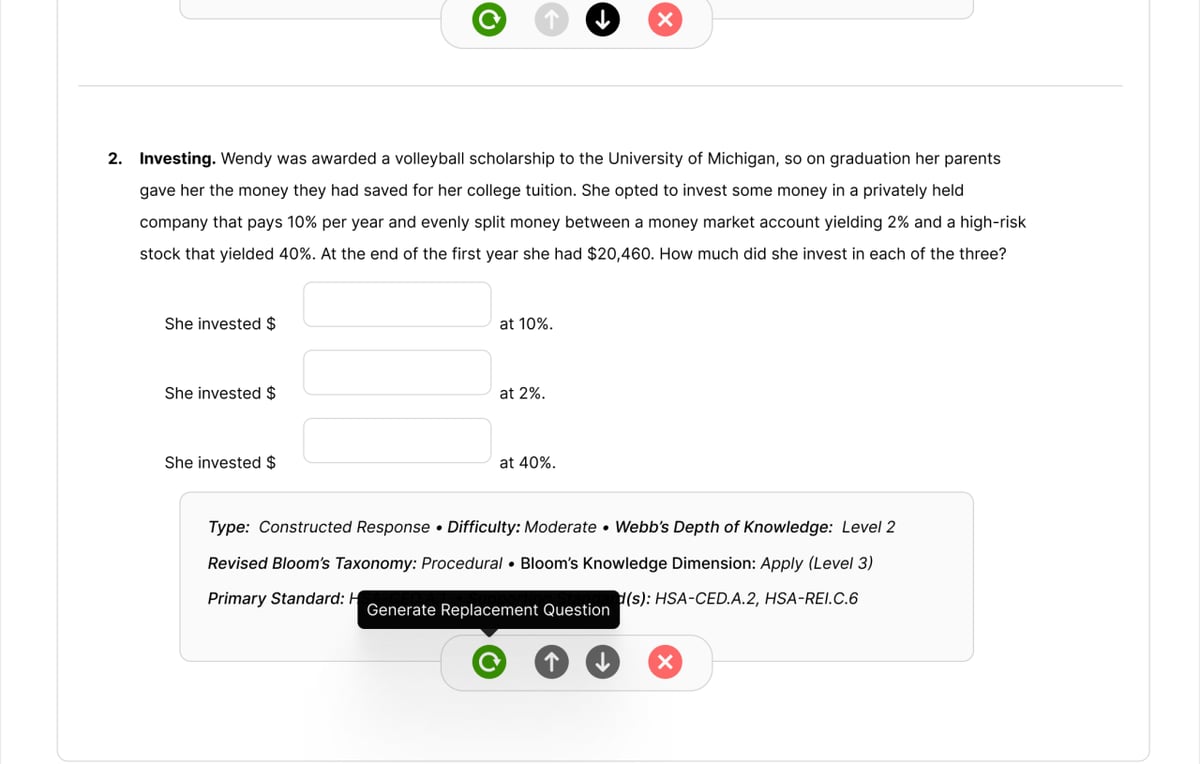
You can also reorder or delete questions to change the flow of your assessment or regenerate questions for new variations that target the same skill set.
Every question includes detailed data, giving you clear insight into the skills it measures and how it connects to your learning goals.
(Showing Wiley Precalculus as example)
Help Students Establish a Foundation for Studying Calculus
-
Conceptual problem solving: Helps students build a deep understanding of mathematics and develop strategies for solving unfamiliar problems by focusing on key concepts and their relationships.
-
Real-world applications: Uses relatable examples to show how functions model real-world changes, highlighting the relevance of mathematics in everyday life.
-
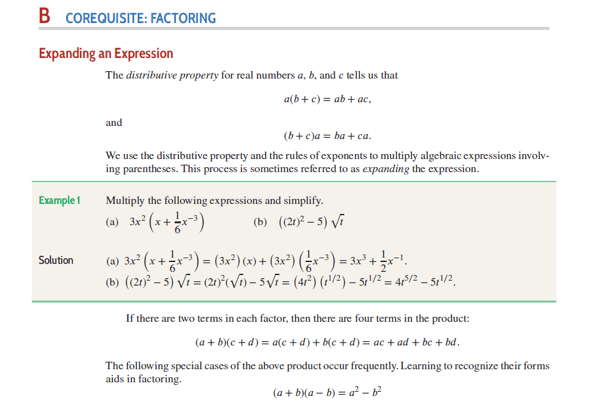
Multiple representations: Applies the Rule of Four (presenting concepts symbolically, numerically, graphically, and verbally) to accommodate different learning styles and promote a well-rounded understanding of a concept.
-
Flexible curriculum: Supports various teaching styles and student needs, allowing instructors to adapt materials based on their approach and students’ backgrounds.
-
Supportive strategies: Provides practical advice to help students interpret problems, use technology, and build confidence in independent problem solving.
Wiley and the Wiley logo are trademarks or registered trademarks of John Wiley & Sons, Inc. and/or its affiliates in the United States and other countries.
Advanced Placement®, AP®, and College Board® are trademarks registered and/or owned by the College Board, which is not affiliated with, and does not endorse, these products.