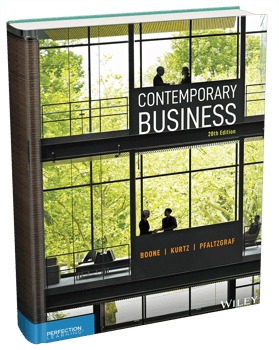
Contemporary Business, 20th Edition
Author: Louis E. Boone, David L. Kurtz & Daniel Pfaltzgraf
Grades 9–12
Course: AP Business with Personal Finance
Contemporary Business, 20th Edition is the student-friendly, accessible introduction to business that equips students to assess and solve today’s global business challenges and thrive in a fast-paced, technology-driven marketplace. Written in a conversational style, the program drives genuine interest in business while building a comprehensive, real-world foundation.
This thoroughly revised edition reflects the forces shaping business right now — globalization, generative AI and emerging technologies, e-commerce and digital marketing, the gig economy and changing workforce dynamics, and the priorities of Generation Z. A structured model of business introduced in Chapter 1 gives students a clear roadmap of how every part of a company interrelates, paired with career-readiness features that connect coursework to real career paths.
NEW for Summer 2026, Wiley texts offer enhanced features to support your classroom.
Assessment Builder
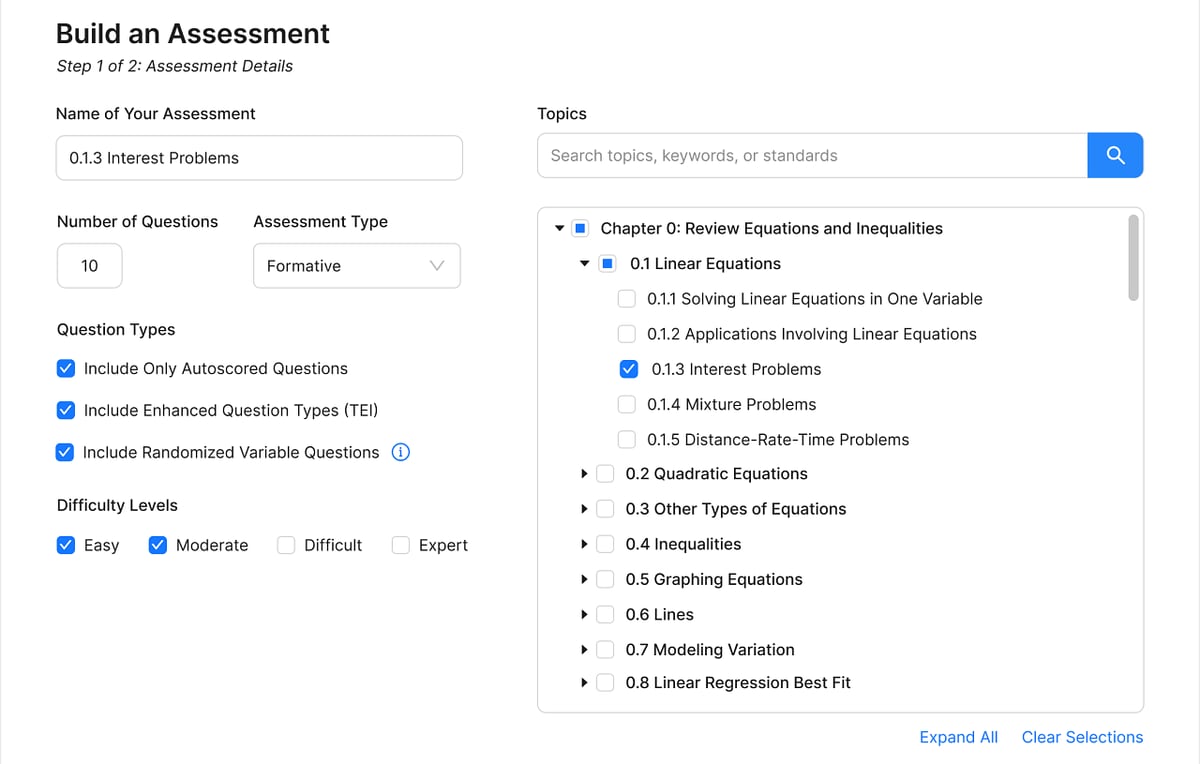
Quickly create customized assessments from a bank of ready‑made questions aligned to your course. Filter by topic and difficulty, reorder or regenerate questions, and then assign online for instant results or print for pencil‑and‑paper testing. Creating assessments specific for your classroom needs has never been simpler!
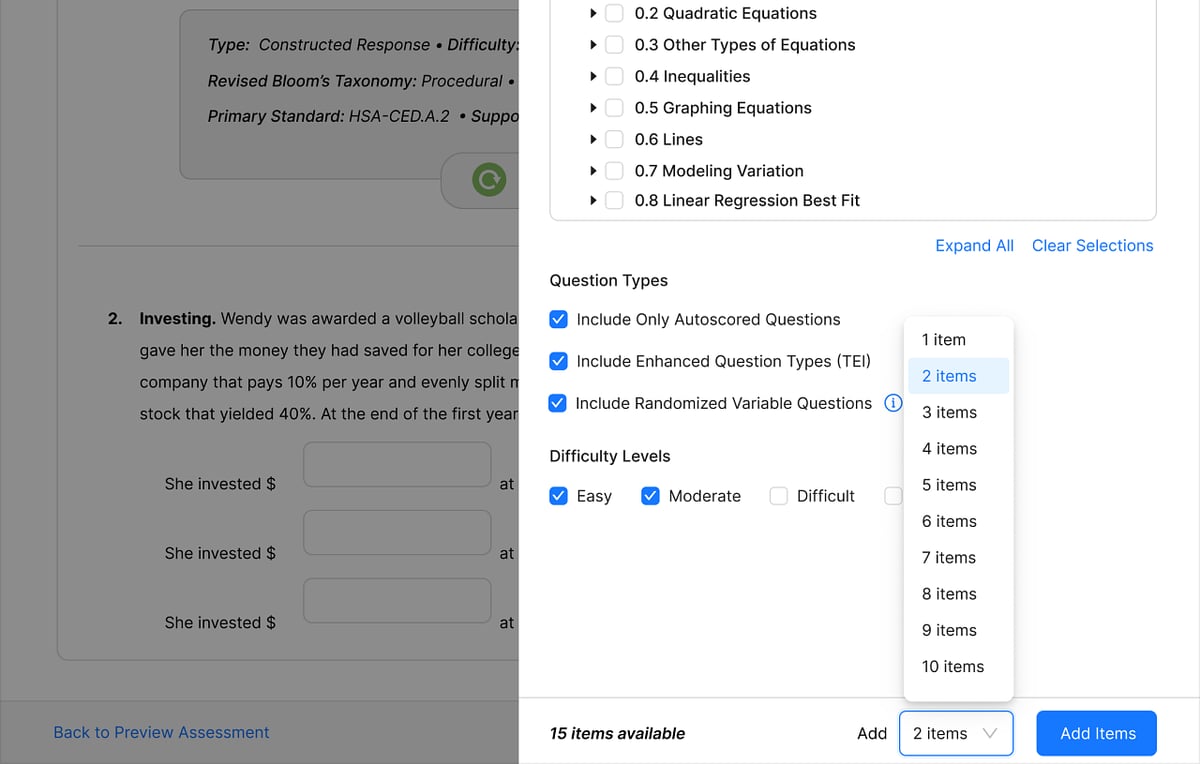
You also have the flexibility to build your own custom assessments from a bank of ready-made questions for your course.
Using the topic selector, simply choose the sections from the book you want to test, and the system will bring up related questions ready for you to use.
(Showing Wiley Precalculus as example)
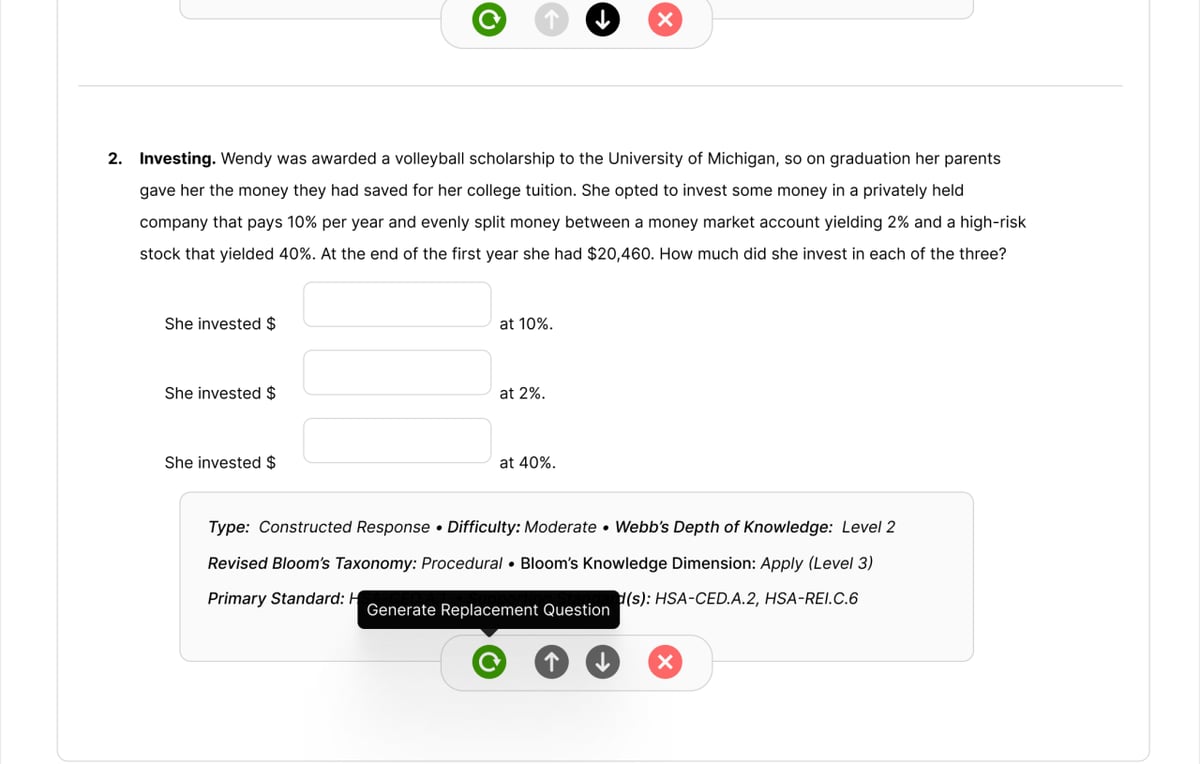
You can also reorder or delete questions to change the flow of your assessment or regenerate questions for new variations that target the same skill set.
Every question includes detailed data, giving you clear insight into the skills it measures and how it connects to your learning goals.
(Showing Wiley Precalculus as example)
Key Features

-
Learning Objectives & Key Terms Every chapter opens with Learning Objectives that preview its major concepts, and key terms are highlighted and defined in the margins so students always know what matters most.
-
Changemaker Chapter Openers Each chapter opens with a vignette profiling a real business leader — Jeff Bezos (Amazon), Brian Chesky (Airbnb), Sam Altman (OpenAI), Melanie Perkins (Canva), Elon Musk (Tesla/SpaceX), and Janet Truncale (Ernst & Young) — spotlighting career-rich industries.
-
Business Model Real success stories from established and start-up companies, including the economics of Taylor Swift’s Eras Tour, Spotify’s growth-versus-profitability balance, and the fallout of Red Lobster’s Endless Shrimp miscalculation.
-
Judgment Call Real business scenarios and ethical dilemmas — PPP fraud, activist investors, the ethics of dynamic pricing — each paired with questions for individual or group discussion.
-
Business & Technology + Clean & Green Business Two recurring features show how companies innovate with technology (UPS routing with AI, Delta’s facial-recognition boarding) and lead on sustainability (biodegradable phone cases, green manufacturing).
-
Job Description & Career Readiness Profiles of careers open to business majors — responsibilities, skills, and outlook — reinforced by End-of-Chapter Cases (Shinola, Yelp, SoFi) and “Did You Know?” real-world callouts.
Wiley and the Wiley logo are trademarks or registered trademarks of John Wiley & Sons, Inc. and/or its affiliates in the United States and other countries.
Advanced Placement®, AP®, and College Board® are trademarks registered and/or owned by the College Board, which is not affiliated with, and does not endorse, these products.