


 View Cart
-1.png) Michael M. Guevara
Michael M. Guevara

1 min read
AAPI Mini Lesson: The Epic Crush of Genie Lo
When Genie “meets” new kid Quentin Sun for the first time in The Epic Crush of Genie Lo by F.C. Yee, it’s on her way to school and he’s getting...
In Frankly in Love by David Yoon, Frank Li is the barely-speaks-Korean-Korean son of Korean parents living in Southern California. His parents have sacrificed everything for him and have expectations of their son who simply wants to be a regular American teen, doing regular American teen things like falling in love—even if his love interest isn’t Korean.
Before this excerpt, Frank explains how his parents “inherited the store from an older Korean couple” to ensure that the store stayed in “Good, Korean hands.” He explains how the store is open year-round and that his parents never take a vacation. For more from this excerpt and to see how the author uses detail, listing, and imagery to develop character and set the tone and mood, see page 11 of Frankly in Love.
Read the excerpt (found on pages 11-12) that follows:
The Store is an hour-long drive from the dystopian perfection of my suburban home of Playa Mesa. It’s in a poor, sun-crumbled part of Southern California largely populated by Mexican- and African-Americans. A world away.
The poor customers give Mom-n-Dad food stamps, which become money, which becomes college tuition for me.
It’s the latest version of the American dream.
I hope the next version of the American dream doesn’t involve gouging people for food stamps.
I’m at The Store now. I’m leaning against the counter. Its varnish is worn in the middle like a tree ring, showing the history of every transaction that’s ever been slid across its surface: candy and beer and diapers and milk and beer and ice cream and beer and beer.
“At the airport,” I once explained to Q, “they hand out title deeds by ethnicity. So the Greeks get diners, the Chinese get laundromats, and the Koreans get liquor stores.
“So that’s how America works,” said Q, taking a deeply ironic bite of his burrito.
Read the excerpt (found on page 25) that follows:
Traffic is super light—just a stream of lights rocketing along at eighty-five miles per hour—and already up to Chinese. Dad points it out,
“This all Chinese now,” he says. “Used to be Mexican, now totally Chinese. They take over whole this area. Look, signs say HONG FU XIAN blablabla, ha ha ha.”
“Chang-chong-ching-chong,” says Mom, laughing too.
“You guys,” I say.
“They eating everything,” says Dad. “Piggy ear, piggy tail, chicken feet, everything they eating,”
I facepalm, but with my knee. Koreans eat quote-weird-end-quote stuff too: sea cucumbers, live octopus, acorn jelly, all of it delicious. White people, black people, Indian, Jamaican, Mexican, people-people eat weird, delicious stuff.
I want to say all of this, but I find I can’t. It’ll just get me nowhere. My parents are just stuck on thinking Koreans are special.
Gross but Good: Have students select a meal they like that they think others might not. Students will write a review of the meal. They can read examples of food reviews from the Pulitzer Prize winning food critic Jonathan Gold. Have students include an image of the meal to accompany their writing. As an alternative, students can explain how to prepare the meal.
Deed of Title: Explain the restaurant, shop, store, type of business you would be handed at the airport.
Free Write: Finish the following line from the excerpt. Be sure to explain your thinking: “I hope the next version of the American dream…”
Say What You Mean: Read the last line from the excerpt. Explain your opinion on what the narrator has expressed. “I want to say all of this, but I find I can’t. It’ll just get me nowhere. My parents are just stuck on thinking Koreans are special.”
Interested in buying any of the books mentioned in this post? Visit our classroom libraries page.
Download the lesson below in a convenient pdf to print or save!

Michael Méndez Guevara is a former high school journalism and English teacher who spent his time in the classroom helping students see themselves as writers and fall in love with reading through the world of young adult literature. As an educational sales consultant with Perfection Learning®, Michael works with teachers and schools on improving their literacy instruction and providing resources to help students achieve academic success. He has taught elementary school, middle school, high school, has worked as a district level leader, and served on the Texas state standards revision committee that developed the state’s current literacy standards. He is the father of three adult sons, the youngest a student at the University of Kansas—Rock Chalk! Michael is working on a professional development book for literacy educators and currently has agents reading the manuscript of his young adult novel The Closest Thing to a Normal Life. When he's not reading, writing, or running, Michael is fully committed to watching as much Law & Order as possible.

1 min read
When Genie “meets” new kid Quentin Sun for the first time in The Epic Crush of Genie Lo by F.C. Yee, it’s on her way to school and he’s getting...

1 min read
Another early morning driveway shuffle. My wife ready to leave for work, my car parked behind hers in the driveway. Clad in my bathrobe and...

1 min read
The following is an excerpt from Patron Saints of Nothing, by Randy Ribay. In the novel, Jay Reguero is set to graduate in a few months and then...

1 min read
In The Astonishing Color of After by Emily X.R. Pan, Leigh Chen Sanders travels to Taiwan to meet her grandparents after the death of her mother....

1 min read
It’s not a secret that people compare American schools with other countries’ schools, and Chinese schools are known as some of the strictest in terms...

1 min read
In Yolk, author Mary H.K. Choi portrays a pair of estranged sisters. They’ve grown apart following their childhood in Texas, and now both live in New...
1 min read
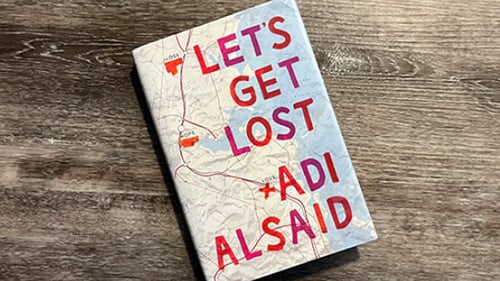
Adi Alsaid has released many young adult books since his first title, Let’s Get Lost, but I can promise you, this one blazes through as just as good,...
1 min read
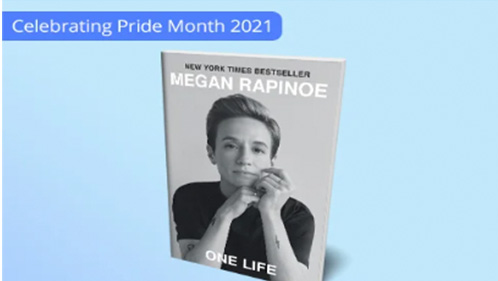
Megan Rapinoe is a well-known women’s soccer player who has helped the U.S. women’s team win two World Cups, won an Olympic gold medal, and...

1 min read
If you're looking for your next date with a book, here’s a list of 10 young adult love stories that showcase the many different bodies, shades, and...
1 min read
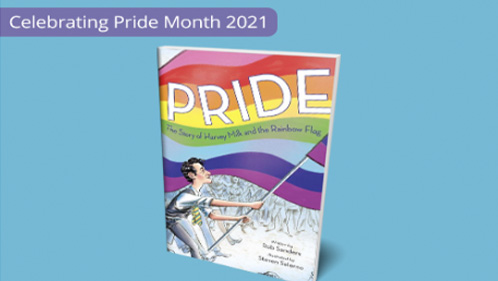
We all know the rainbow flag stands for the LGBTQIA+ community and it stands for pride, but did you know that each color has a meaning? Or that...
1 min read
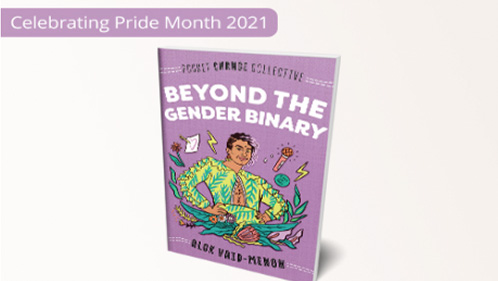
The objective of Pride is to show just that, pride! If you’re a part of the queer community, you’re celebrated, and if you’re an ally, your job is to...
1 min read
In my first period class of sophomores at a high school on the Southwest side of San Antonio, I had one White student, one Muslim student, and the...