


 View Cart
1 min read
Tips for the AP® Gov FRQ
The Free-Response Question (FRQ) portion of the Advanced Placement® exam provides test takers with the opportunity to demonstrate their knowledge on...

1 min read

One of the more perplexing topics for students on the AP exam is federalism, due to the complex nature of the federal-state relationship. Most students will grasp that there is a clear division of power between the states and the federal government with each having authority in their own sphere and occasionally overlapping authority. This often results with students failing to understand the interconnectedness of the two levels of government and how fiscal federalism truly functions in the context of the AP exam and the American polity.
When students are introduced to federalism a lot of vocabulary is thrown their way: the 10th Amendment, enumerated powers, implied powers, delegated powers, implied powers, devolution, etc. These new phrases are often too much for students as they get focused on learning these new terms without a proper context of how they shape government action and behavior. Students are left in a daze, often feeling detached from how government functions and the relevance to their lived experience.
This is particularly important as students plan to take the AP exam. Because of all the new vocabulary and the dense nature of the material, I have found students frequently forget or fail to connect to their schema of government fiscal federalism. Fiscal federalism frequently appears as a Free-Response Question (FRQ) and almost always appears on the exam. Below is an activity that I use with my students in advance of the AP exam to remind them of the significance of fiscal federalism.
This short activity is introduced by asking students to use their textbook to come up with a definition for each term. Following this, students are asked to research—using local community websites, newspapers, and other media—to find an example of how each of the vocabulary terms involved with fiscal federalism has directly impacted our community today.
Download the review activity below!

Pat Sprinkle is a 13th year history teacher at the NYC Lab School for Collaborative Studies, teaching AP® U.S. History and AP® U.S. Politics and Government. Pat is a graduate of The Ohio State University and Columbia University. Pat has served as a member of the Teacher Advisory Council for the Bill and Melinda Gates Foundation, National Humanities Center, and the National Constitution Center. In addition, Pat was a 2013 James Madison Fellow along with a 2021 C-SPAN Fellow. Pat lives in Jersey City, NJ with his wife, son (Franklin), and dog (Lyndon).

1 min read
The Free-Response Question (FRQ) portion of the Advanced Placement® exam provides test takers with the opportunity to demonstrate their knowledge on...

1 min read
You know the Style #4 Free Response Question on the College Board’s national Government exam can be a real challenge. I am talking about the argument...

1 min read
As the AP® U.S. Government and Politics exam approaches, students are in the final stretch, and how they use this time can make all the difference....

1 min read
Perhaps you heard of that Supreme Court decision handed down last year, where citizens and an interest group challenged a government-run World War I...

1 min read
I can’t believe it’s time to start reviewing for the AP® United States Government & Politics Exam. This year has absolutely flown! Thankfully, my...

1 min read
The argumentative essay question on the AP U.S. Government and Politics exam demands a synthesis of content knowledge, analytical skill, and...

1 min read
It’s about that time. The Advanced Placement® Government & Politics Exam is around the corner. I’m sharing my top five tips to help you prepare...

1 min read
Each year after the AP® exam I ask students to evaluate my class. Last year, they overwhelmingly identified that they wanted to work on FRQs more...

1 min read
In 2021, the College Board® added a new section to the AP® U.S Government and Politics Exam: quantitative analysis. This counts for four raw points...
1 min read
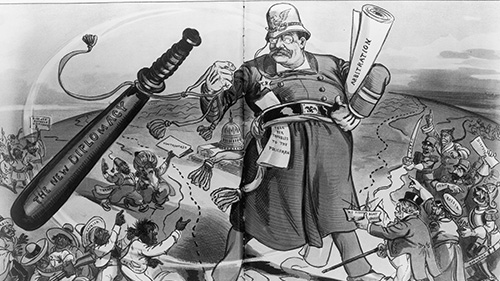
Political cartoons have influenced the public and brought about change like other tools in the press. The historic 1754 cartoon of a sliced-up snake,...

1 min read
Though the College Board’s AP® United States Government and Politics FRQs #3 and #4 may be more involved and seem more challenging, FRQ #1 and #2 can...

1 min read
From a practical point of view, argumentation is at the heart of the free response section of the AP exam. This can be particularly difficult with...