1 min read
Welcoming English Language Learners into Your Middle School Classroom
It’s that time! The school year is beginning and you’re ready to welcome up to 180 new learners into your classroom. Whether you’re in your first...

2 min read

Dr. Almitra Berry Aug 26, 2025, 1:34:42 PM
The summer break is winding down, and soon you'll be setting up your classroom for another year of learning adventures. Whether you're a first-year educator or a seasoned veteran, there's something both thrilling and nerve-wracking about those first few weeks when you meet your new learners.
This year, you might be welcoming emergent bilingual learners who speak Mandarin or Tagalog, Arabic or Portuguese, or perhaps learners who navigate between African American English or Chicano English and academic language. Each of these young people brings linguistic superpowers to your classroom—but only if we know how to recognize and nurture them.
After working with tens of thousands of educators across the country, I've seen how the right back-to-school strategies can set the tone for an entire year of success. The difference between a classroom where multilingual learners thrive and one where they struggle often comes down to those crucial first days and weeks.
Here are my top six strategies for launching a successful year with your emergent bilingual learners:
Before you dive into content, spend time learning about your learners' cultural backgrounds and lived experiences. Create opportunities for them to share their stories, traditions, and perspectives. This isn't just about being nice – it's about activating prior knowledge and creating schema that will support their academic success throughout the year.
Don't wait until October to set up peer support systems. From the very first week, create intentional partnerships and small groups that allow learners to support each other linguistically and culturally. Sometimes the most powerful teaching happens when a newcomer gets help from a peer who traveled that same journey two years ago.
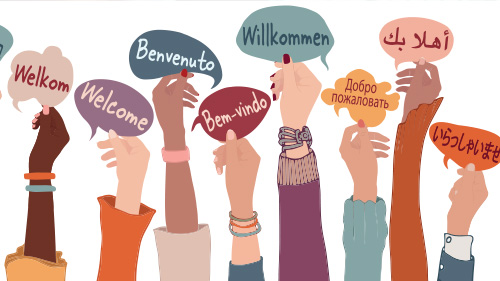
Your walls should reflect the linguistic diversity of your learners. Display welcome signs in multiple languages, create word walls that include home language connections, and designate spaces where learners can showcase their cultural artifacts. When learners see their identities reflected in the physical space, they understand that their whole selves are valued.
Permit your learners to use all their linguistic resources as they make meaning. This might mean allowing them to discuss a text in their home language before writing about it in English or encouraging them to create bilingual poetry that bridges their worlds. Remember, translanguaging isn't a crutch – it's a cognitive strength.
Traditional assessments often measure English proficiency rather than content knowledge. From the start, build in multiple ways for learners to demonstrate what they know – through visual projects, oral presentations, collaborative work, and performance-based tasks. This approach benefits all learners while being essential for your emergent bilingual learners.
Reach out to families in culturally appropriate ways and in languages they understand. Many families have incredible knowledge about literacy and learning – it just might look different from what we expect. When families feel welcomed and valued, learners thrive academically.
The beautiful thing about these strategies? They strengthen your entire classroom community. When you create an environment where multilingual learners can flourish, you're modeling inclusivity, empathy, and global awareness for all your learners.
I'm excited to dive deeper into these strategies with you in our upcoming webinar, "Back-to-School: Building Bridges for Multilingual Learners." We'll explore how to implement these approaches using evidence-based practices and the resources in your current ELA curriculum, including specific examples from Connections: Literature. Whether you join us live or access the recording later, you'll walk away with practical resources you can use immediately.
The new school year holds incredible possibilities. Let's make sure we're ready to unlock them for every learner who walks through our doors.
Almitra L. Berry, Ed.D. serves as the content expert for multilingual development in Perfection Learning's Connections: Literature program for middle school and as an educational consultant for the program, contributing expertise on culturally and linguistically diverse learners. Follow her on BlueSky @almitraberry for ongoing insights.
1 min read
It’s that time! The school year is beginning and you’re ready to welcome up to 180 new learners into your classroom. Whether you’re in your first...

1 min read
Walk into a middle school classroom during a lively literature circle and you’ll hear questions, laughter, debate, and—most important—learners...

1 min read
December always asks a lot of us.

1 min read
I was always a book worm.

1 min read
As middle school educators, we know the moment when a learner comes alive in class. Maybe they're debating a character's motivation or crafting a...

1 min read
For some reason, students always struggle when teachers ask them to incorporate sources. It is a process that takes practice to do seamlessly, but...
1 min read
What happens when we stop seeing language diversity as a barrier and start embracing it as our greatest classroom asset?
1 min read
In American K-12 public schools, English language learners (ELLs) make up over 10% of students. 10% may not sound like much, but that’s over 5...

1 min read
Do you ever have one of those days where you ponder, “What on Earth am I doing, and am I doing it right???” I did. Often. And they were often...

1 min read
In my last post, I shared the success stories of two of my multilingual learners. I told you I used strategies, but I didn’t share which ones.

1 min read
What do a wooden spoon, neon vest, ball of yarn, and rubber duck have in common? In my classroom, they become tools students use to solve real-world...
1 min read
When I think about the success stories of my middle school emergent bilingual learners, I can’t help but smile. What about you? Sure, there were...