


 View Cart
1 min read
How to Approach the 2023 AP® World History Exam
Experienced AP World History teacher Dave Drzonek and AP World History Exam table leader Charlie Hart discuss what students did well and what they...

2 min read
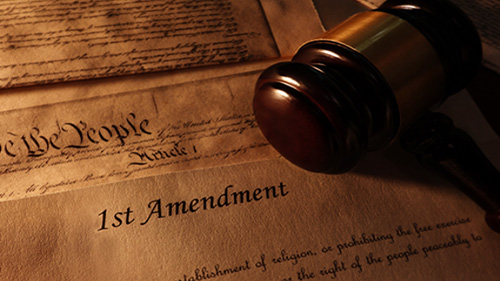
One of the most important goals of civics education is to get students to understand the imperfections of the constitutional system of the United States. The system, webbed together through a series of compromises, reflects the values of the authors, largely based upon Judeo-Christian values, shaped, of course, by the Enlightenment, and an intense fascination with the structures and systems of ancient Greece and Rome. This two-day project, at the culmination of the year, or a unit on the Constitution, helps students to think about constitutional amendments and how they can be improved upon to meet the needs of the 21st century.
Going into this lesson, I will often start by introducing the nature of constitutional amendments. There are two very important points here. First, it is important for students to know how constitutional amendments are approved with supermajority support in both chambers of Congress and three-fourths of the states. Often, students do not appreciate how difficult this is to achieve. Going over failed constitutional amendments, such as the ERA, can better help students to understand the magnitude of securing ratification of a new constitutional amendment. Second, this is a great way to teach into how the amendment procedure reflects the unique nature of federalism. The system of federalism is engrained over many aspects of the national government and the amendment procedure is yet another way.
When doing the two-day attached project, students tend to enjoy the choice incorporated into the assignment, and the opportunity to connect the problems of the United States Constitution into contemporary debate. Giving students the flexibility to pick the issues they examine and make connections to the world around them is the type of civics reasoning skills our young people need for our democracy. This lesson works well when not only studying the Constitution, but also a class on current events.
In summation, it is important to consider the United States Constitution from multiple perspectives. This project allows for this. The final act of each group introducing and voting on a constitutional amendment adds an aura of authenticity that is hard to replicate. Students will enjoy uncovering and debating the nuances of proposed changes to the Constitution. Ultimately, very few constitutional amendments are passed in my class (due to the three-fourths threshold) and that serves as a learning opportunity. Students are challenged to reflect on why it is so challenging to create constitutional change and forced to grapple with the question of whether the Constitutional system is broken or in fact, working as the founders intended, by charting the course towards stability and incrementalism.

Pat Sprinkle is a 13th year history teacher at the NYC Lab School for Collaborative Studies, teaching AP® U.S. History and AP® U.S. Politics and Government. Pat is a graduate of The Ohio State University and Columbia University. Pat has served as a member of the Teacher Advisory Council for the Bill and Melinda Gates Foundation, National Humanities Center, and the National Constitution Center. In addition, Pat was a 2013 James Madison Fellow along with a 2021 C-SPAN Fellow. Pat lives in Jersey City, NJ with his wife, son (Franklin), and dog (Lyndon).

1 min read
Experienced AP World History teacher Dave Drzonek and AP World History Exam table leader Charlie Hart discuss what students did well and what they...
1 min read
The Supreme Court of the United States is often seen as the most distant and befuddling branch for my students. Whether it is misunderstanding their...

1 min read
One of the greatest rewards of teaching history is when students are able to show that they can think in a complex manner and recognize that history...

1 min read
Contextualization is an intriguing skill introduced in the redesigned AP History courses. It plays a crucial role in multiple aspects of the courses,...
1 min read
Even though it feels like the whirlwind of the school year just ended, it’s never too early to start thinking through what you want your course to...

1 min read
In honor of Black History Month, I have created a lesson that can be used for students to learn (or review what they have learned) about African...

1 min read
With just one percent of students earning the complexity point on the 2021 AP® World History DBQ, is teaching it even worth it? John Maunu says,...
1 min read
AP® Psychology is just as much a class with an abundance of new vocabulary as it is an introduction into the field of psychology. Students often...

1 min read
This lesson module can be used by regular or AP® World, U.S., or European History teachers to develop an understanding of how sport has been used as...
1 min read
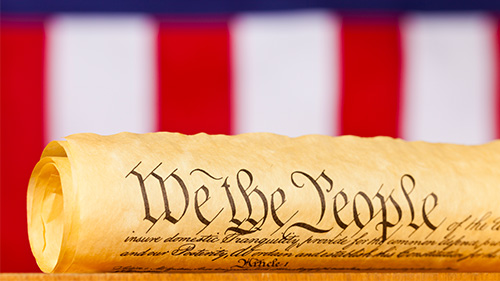
One of the more perplexing topics for students on the AP exam is federalism, due to the complex nature of the federal-state relationship. Most...
1 min read
Between 1607 and 1754, the British presence in North America vastly increased and there were more than 30 British colonies. Among those colonies were...
.jpg)
1 min read
Happy Halloween week! For those wanting to sprinkle a little Halloween spirit into the classroom this week, the attached lesson plan uses the novel ...