Skip to the main content
Perfection Learning

AP English

Help ALL your students achieve AP success with our coursebooks designed by leading experts.

AP & Honors Science

Guide students through real-world application of science concepts with Wiley’s advanced programs.

AP Social Studies

Discover a variety of accessible yet rigorous programs designed to align with AP social studies courses.

AP Computer Science

Prepare students for success on the AP Computer Science A exam.

AP & Honors Mathematics

Explore Wiley titles to support both AP and Honors mathematics instruction.

Literacy Skills & Intensive Reading

Connections: Reading – Grades 6–12

Empower student success with a proven intensive reading program that develops strong reading skills in striving readers.

Drama, Speech & Debate

Basic Drama Projects 10th Edition

Build students’ confidence and competence with comprehensive, project-based theatre instruction.

Literature

Connections: Literature

Support learners as they study dynamic, relevant texts and bring the richness of diverse voices to students through literature.

Middle School Preview | Shop
High School Preview | Shop
 

Literature & Thought

Develop critical thinking, reading, and writing across literacy themes, genres, historical eras, and current events.

Language Arts

Vocabu-Lit® – Grades 6–12

Help students build word power using high-quality contemporary and classic literature, nonfiction, essays, and more.


Connections: Writing & Language

Help students develop grammar, usage, mechanics, vocabulary, spelling, and writing and editing skills.

Reading/English Language Arts

Measuring Up to the English Language Arts Standards

Incorporate standards-driven teaching strategies to complement your ELA curriculum.

English Language Learners

Measuring Up for English Language Learners

Incorporate research-based best practices for ELLs with an approach that includes a focus on language acquisition strategies.

Mathematics

Measuring Up to the Mathematics Standards

Incorporate standards-driven teaching strategies to complement your mathematics curriculum.

Foundations

Measuring Up Foundations

Help students master foundational math skills that are critical for students to find academic success.

Reading Preview | Shop
Mathematics Preview | Shop

Science

Measuring Up to the Next Generation Science Standards

Give students comprehensive NGSS coverage while targeting instruction and providing rigorous standards practice.

Assessment

Measuring Up Live

Deliver innovative assessment and practice technology designed to offer data-driven instructional support.

World Languages

Social Studies

Science

Turtleback

Reinforced bindings of classroom novels and nonfiction for maximum durability with a lifetime guarantee.

SAT Prep

SAT Prep

Financial Literacy

Introduction to Personal Finance

Culinary Arts

Professional Cooking

Professional Baking

Welcome.

For a better website experience, please confirm you are in:

4 min read

AP® Lang: Reflecting on Anchor Texts and Using Chief Reader Reports

AP® Lang: Reflecting on Anchor Texts and Using Chief Reader Reports

This lesson empowers students to understand and demystify the AP® English Language Free-Response exam, with a focus on:

  • Interpreting exam prompts and seeing how they evolve (e.g., types of tasks and expectations).
  • Navigating the transition from the traditional nine-point holistic rubric to the new six-point analytic rubric—how this shift enhances clarity in expectations, scoring, and self-assessment.
  • Examining real student essays (“anchor papers”) to connect classroom writing with actual AP® scoring.

Through this process, students actively engage in critical reflection and strategic planning to improve their performance on argument essays (specifically Q3) by aligning writing with expectations. By the end of the lesson, students should:

  1. Analyze AP® exam prompts to identify task types, language cues, themes, and what expectations are built into each prompt.
  2. Understand the differences between holistic and analytic rubrics, including the focus on Thesis, Evidence & Commentary, and Sophistication in the six-point model. 
  3. Score sample essays using each Reporting Category and compare results with official scoring commentary to strengthen self-awareness about writing strengths and areas for growth.
  4. Interpret the Chief Reader Report to learn common student pitfalls and effective strategies.
  5. Reflect on personal and peer writing, informed by rubric insights and sample responses, to develop targeted next steps in writing improvement.


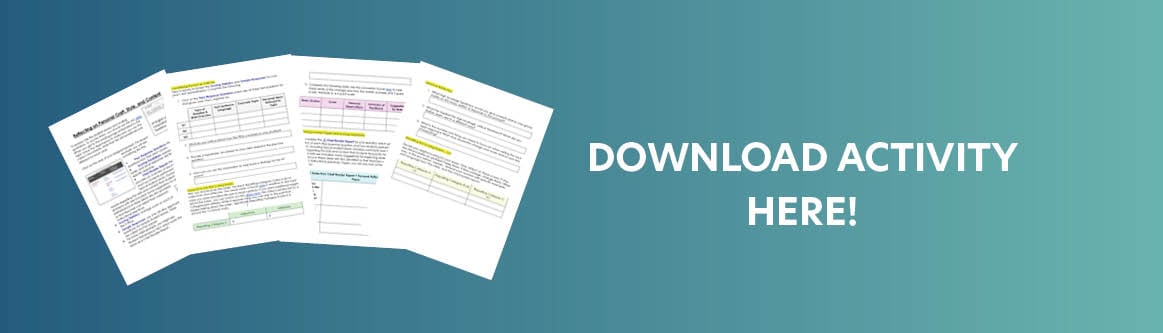
Download Activity Here!

Before the Lesson

  • Review the shift from the nine-point holistic rubric to the six-point analytic rubric (Thesis, Evidence & Commentary, Sophistication) to guide students through scoring confidently.
  • Download and organize the Free‑Response Questions, Scoring Guidelines, Chief Reader Report, and Sample Anchor Papers (Q3) for the specific exam year.
  • Locate the Marco Learning or similar resources that explain how to use the new analytic rubric effectively.
  • Manage any required technology access, particularly links to official AP materials or rubric explainer videos.
  • Arrange for a projector or screen if going to present anchor papers or rubric examples to the class.
  • Ensure students are familiar with prompt analysis—how to parse task type, key verbs, and thematic elements.
  • Begin instruction on basic rhetorical and essay structures, including outlining techniques and strong thesis formulation.
  • Use short, low-stakes diagnostics—like timed thesis writing or FRQ quick writes—to assess students’ prior skills and writing levels.
  • Plan for collaborative discussions where students can compare hypotheses about prompt differences and scoring outcomes.
  • Review rubric basics: Understand the categories and expectations of the analytic rubric (Thesis, Evidence & Commentary, Sophistication).
  • Bring prior essays: Have previous AP-style FRQ writing (especially Q3) ready for self-assessment and comparison.
  • Come prepared to analyze: Be ready to examine FRQ prompts, anchor papers, and Chief Reader insights critically.

Materials and Resources

  • Copies of the new analytic rubric (six-point), detailing:
    • Thesis (1 point)
    • Evidence & Commentary (4 points)
    • Sophistication (1 point)
  • (Optional) Copies of the old holistic rubric (nine-point) for comparison.
  • Access to and printouts or digital rights for:
    • Free-Response Questions (FRQs) – all three types (Q1, Q2, Q3).
    • Scoring Guidelines (Rubric language and scoring criteria).
    • Chief Reader Report for Q3—provides data on common errors and instructional suggestions.
    • Sample Anchor Papers (low, medium, high scoring) for Q3—used for practice scoring.
  • Projector or interactive display to show:
    • Rubric breakdowns (as visual diagrams or tables).
    • Anchor papers for live annotation.
    • Excerpts from Chief Reader Reports.
  • Prompt-analysis worksheet that includes sections for:
    • Identifying task type, language, themes (Q1–Q3).
  • Rubric analysis chart for students to list adjectives and attributes under each Reporting Category.
  • Anchor Paper Comparison Table with columns for:
    • Essay Title / Score / Observations / Feedback / Suggestions.
  • Reflection prompts for analyzing Chief Reader Report and personal writing strategies.
  • Computers, tablets, or laptops for accessing:
    • AP® materials online (e.g., College Board site).
    • Videos explaining rubric changes (e.g., Marco Learning tutorials).
  • Notebooks or paper for note-taking and hypothesis writing.
  • Pens, pencils, and highlighters for markup and feedback.
  • (Optional) Sticky notes for marking important lines or scoring criteria in printed anchors.
  • Prepared exit-ticket prompts or assessment tools for reflection (e.g., “What one strategy will most improve your next Q3?”).
  • Availability of prior student essays (especially previous Q3s) if doing self-assessment.

1. Warm-Up & Context (10 minutes)

  • Begin with a brief discussion:
    “What kind of feedback would be most useful to you when writing AP essays?”
  • Introduce the difference between holistic and analytic rubrics:
    • A holistic rubric gives one overall score based on general quality—quick to score but lacks targeted feedback. Cult of Pedagogy
    • An analytic rubric breaks writing into parts—e.g., thesis, evidence & commentary, sophistication—allowing precise feedback on each area.

2. Introduce the New Analytic Rubric (15 minutes)

  • Present the key components of the new AP® analytic rubric:
    • Thesis — 1 point; must be a defensible claim, not just a restatement. 
    • Evidence & Commentary — 4 points; emphasizes not only citing evidence but thoroughly explaining how it supports claims. 
    • Sophistication — 1 point; demonstrates complex thinking, rhetorical awareness, or deeper insight. 
  • Explain how the analytic rubric offers clearer expectations and easier scoring. 

3. Analyze FRQ Prompts (15 minutes)

  • Distribute the FRQs (Q1, Q2, Q3) from a chosen exam year.
  • In pairs, students identify for each prompt:
    • Task type (argumentative, rhetorical analysis, synthesis)
    • Task language (what students are explicitly asked to do)
    • Concrete topics (the specific subject matter)
    • Universal themes (broader concepts like power, identity, justice)
  • Facilitate a discussion comparing prompts and their expectations.

4. Score Anchor Papers (30 minutes)

  • Provide students with at least three anchor papers for Q3 (argument) across low, mid, and high score ranges.
  • In small groups:
    1. Apply the analytic rubric to each anchor paper, scoring Thesis, Evidence & Commentary, and Sophistication.
    2. Record observations using a chart: Essay Title → Scores (A, B, C) → Feedback Summary → Suggestions for the Writer.
    3. Compare their scores with official scoring and articulate any differences in understanding.

5. Compare Holistic vs. Analytic Rubrics (10 minutes)

  • Discuss:
    • The holistic rubric gives one overall quality score; the analytic rubric allocates separate points to distinct categories.
    • The analytic approach enables focused feedback on specific writing elements. 
  • Encourage students to reflect on which format they find more helpful and why.

6. Read and Reflect on Chief Reader Feedback (10 minutes)

  • Provide the Chief Reader Report for Q3.
  • Students extract:
    • Common errors (e.g., weak thesis, superficial evidence, lack of sophistication)
    • Key verbs denoting expectations (e.g., “analyze,” “develop,” “craft”)
    • Instructional suggestions for improvement
  • Students note personal takeaways and strategies for better writing.

7. Personal Reflection & Strategy (10 minutes)

  • Students identify one high-leverage improvement for their next Q3:
    • Example prompts:
      “How would improving my evidence & commentary raise my score in that category?”
      “What shift in thinking could earn the sophistication point?”
  • Optionally, have them draft a brief plan or checklist to apply in future writing.

AP English book covers. Make college level content accessible to all students without sacrificing the rigor required for success.

Real-Life Connections to AP® Free Response Questions

Real-Life Connections to AP® Free Response Questions

To reinforce essential AP Free Response skills (argumentation, rhetorical analysis, synthesis) by having students connect question types and...

Read More
AP® Lang: Understanding a Line of Reasoning

AP® Lang: Understanding a Line of Reasoning

Guide students through an engaging activity that stresses the importance of the thesis & topic sentences to structure the line of reasoning. Students...

Read More
Q&A with an AP Lang Reader (2024)

Q&A with an AP Lang Reader (2024)

Dr. Brandon Abdon is joined by an AP® Language Exam Reader Christopher Judson to discuss the 2024 AP Exam. {% video_player "embed_player"...

Read More
Jar-ing Their Thinking: A Hands-On Rhetorical Review for AP® Lang

Jar-ing Their Thinking: A Hands-On Rhetorical Review for AP® Lang

You’ve taught rhetorical devices. You’ve practiced essays. But somehow, when it matters the most, students still struggle to connect the two. At this...

Read More
Discussion with the Chief AP Lang Reader (2024)

Discussion with the Chief AP Lang Reader (2024)

Chief AP Language and Composition reader Michael Neal joins Dr. Brandon Abdon to discuss to the 2024 AP exam. {% video_player "embed_player"...

Read More
Top 5 Takeaways From the 2023 AP® Language Exam

Top 5 Takeaways From the 2023 AP® Language Exam

While the 2023 AP English Language and Composition exam represents year 4 of assessment using the analytic scoring guide and year 3 of the changes to...

Read More
AP® English Students and Teachers Share Strategies Before Exams

AP® English Students and Teachers Share Strategies Before Exams

These two AP English webinars offer practical strategies to help both teachers and students make the most of the final month before exams, so...

Read More
Building Confidence and Diminishing Anxiety For the AP® Lang Exam

Building Confidence and Diminishing Anxiety For the AP® Lang Exam

As educators, we face a lot of criticism for “teaching to the test.” While our goal as AP Lang teachers is to help our students become great writers,...

Read More
Testimonials from the Trenches: Suggestions from Students Who Soared

Testimonials from the Trenches: Suggestions from Students Who Soared

Last year, several students in my AP Language and Composition course scored 4’s and 5’s on their exam. The secret to their success did not surprise...

Read More
Common Mistakes in Rhetorical Analysis Essays (and How to Fix Them)

Common Mistakes in Rhetorical Analysis Essays (and How to Fix Them)

When scoring AP Lang rhetorical analysis essays, I typically see one common problem: students select good evidence, but they struggle to develop...

Read More
25(ish) Days Until the AP Lang Exam: What to do and not to do

25(ish) Days Until the AP Lang Exam: What to do and not to do

Dr. Brandon Abdon is joined by AP Lit expert Susan Barber to discuss last minute strategies for preparing your students for the AP exam.

Read More
Prepping Your Students for the AP® English Exams

Prepping Your Students for the AP® English Exams

It’s a month before the AP exam and you’re freaking out- You're trying to think about what you need to review with your students, what you should ask...

Read More