


 View Cart
 Dr. Brandon Abdon

1 min read
AP® Lang: Teach Students to Support an Original Argument with Sources
One of the most important skills students can develop is making a claim and supporting it with evidence. Too often, students believe research is...
If you teach grades 6–12 ELA, you know the squeeze. You are expected to move students toward sophisticated analysis of theme, rhetoric, structure, and argument—while also addressing gaps in fluency, vocabulary, sentence-level control, and even foundational decoding. You are asked to teach literary theory, research writing, and disciplinary thinking, often without formal training in adolescent literacy development or the Science of Reading. Meanwhile, national data continues to show persistent challenges in adolescent reading achievement (National Center for Education Statistics [NCES], 2024).
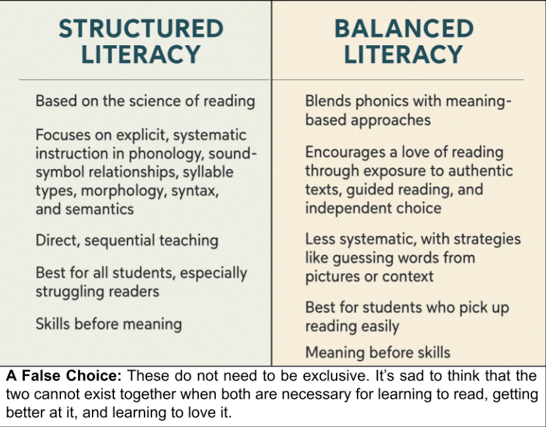
Secondary teachers are not wrong to feel stretched. The tension between “skill-building” and “real reading” (sometimes represented as the difference between “structured literacy” and “balanced literacy”) is real, but it is also solvable. The strongest literacy classrooms reject this false choice. Instead, they treat literacy skills as portable tools that students practice deliberately and then apply repeatedly inside longer, meaningful texts.

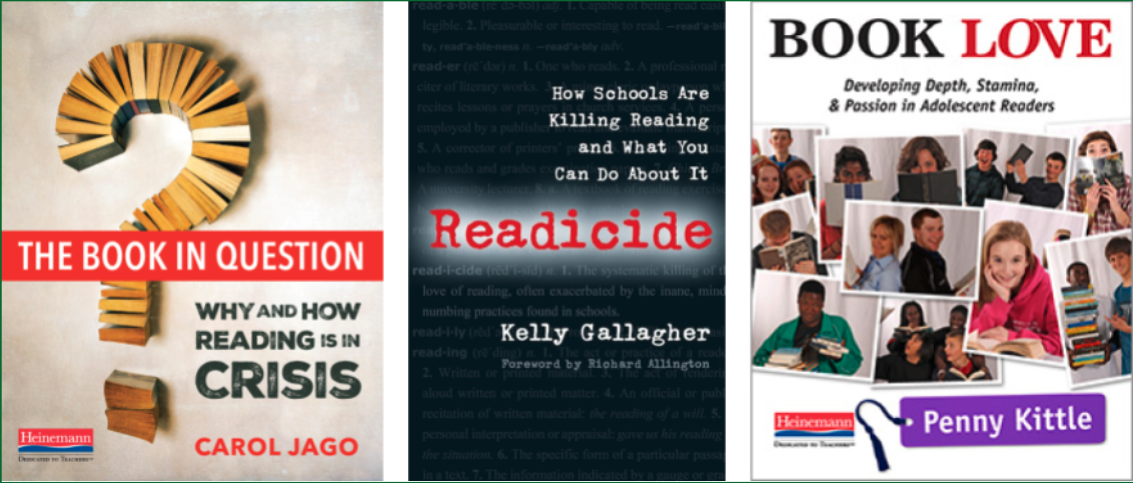
At the same time, the research base and professional wisdom are clear: sustained reading matters. Carol Jago (2018) argues that students need extended engagement with whole texts in order to build interpretive stamina and ethical imagination. Kelly Gallagher (2009) warns that over-fragmentation and test-driven instruction can lead to “readicide”—the systematic killing of the love of reading. Penny Kittle (2013) demonstrates that volume, access, and choice are essential for developing reading identities and stamina.
Longer texts demand cognitive endurance. They require students to track character development across chapters, synthesize ideas over time, and revise interpretations as new evidence emerges. These are not merely literary skills; they are habits of mind central to critical thinking.
The key question, then, is not whether to teach skills or teach novels. It is how to design instruction so that skills live inside sustained reading.
Transfer does not happen accidentally. Students need structured opportunities to practice a literacy move in isolation and then apply it within longer texts. Jim Burke (2008) emphasizes the importance of giving students concrete, repeatable strategies they can use independently across contexts.
The key word in what Burke emphasizes is “repeatable” because it must be repeatable by the student in a later moment but should also be something the teacher does again. And again. And again. Students build automaticity as they practice these things regularly and with increasingly complex (and longer) texts.
After a brief mini-lesson, students practice the skill during sustained reading through short written responses, margin annotations, or focused discussion prompts. Writing-to-read strategies are especially powerful here. Graham and Hebert’s (2010) meta-analysis found that writing about texts significantly improves reading comprehension. When students summarize, synthesize, or analyze while reading a novel, they deepen understanding rather than interrupt it.
Here are four classroom “transfer bridges” that work especially well with longer texts.
1. Make one skill the weekly spotlight → and keep it small enough to travel
Instead of teaching something broad like “analyzing author’s purpose” as a unit-sized abstraction, focus on micro-skills that students can apply on page 3 and page 303 alike:
After explicitly teaching the move, require students to practice it in low-stakes repetitions during sustained reading: a three-minute quickwrite, a margin note using a sentence stem, or a single highlighted sentence followed by a “because” explanation. This approach protects uninterrupted reading time while ensuring the skill is practiced inside authentic text rather than in isolation.
Warning: This shouldn’t prevent you (or students!) from connecting to other learning from earlier in the class, but resist the urge to fall too deeply back into that or to connect to things not yet learned. Working with the few students who are ready for that can be a way of supporting and encouraging such accelerated thinking without too quickly leaving others behind.
2) Pair reading with writing-to-read moves (because writing improves reading)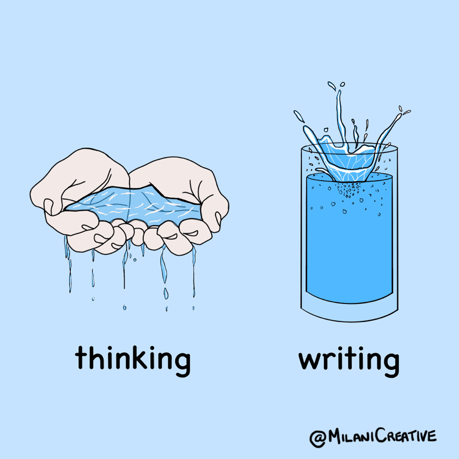
If you want comprehension to deepen, discussion questions alone are not enough. Research consistently shows that writing about what students read strengthens comprehension and reinforces learning. When students must put their thinking into words, they clarify and refine it.
In longer texts, writing-to-read routines can remain lightweight and consistent:
These structures do not interrupt reading; they stabilize thinking and meaning. They help students track ideas across chapters and practice reasoning in real time.
Warning: The idea that you have to read and respond to everything written by students will interfere with this significantly. Think about how you can just use most of these things to initiate and record thinking that then leads into other work. This will free you up to scan students’ writing and have discussions with them.
"More often, [long texts] collapse under the weight of excessive assignments."
3. Use choice reading of longer texts to build volume—then link it to shared skills
This is my favorite approach and the one I advocate for most often. It works perfectly to focus on learning, practicing, and extending necessary skills while still allowing for student choice (or limited choice, as I suggest for AP classrooms). 
Importantly, remember that choice reading is not a reward or an add-on. It is a literacy engine. When students read books they have selected (within a thoughtfully curated classroom library) they read more pages, build stamina, and strengthen comprehension. Volume matters.
To keep choice reading rigorous without turning it into a worksheet factory, anchor it to the same weekly skill spotlight used in whole-class texts:
This structure eliminates the false choice. You get engagement and volume alongside sustained skill practice.
Warning: This can feel and even be daunting at first as you may feel you have to be an expert in each and every book. That is not the case. Instead, remember that you are an expert in teaching and learning. The text doesn’t necessarily matter as much.
4. Keep whole-class long texts, but reduce task fatigue and increase meaning
Long texts rarely fail because of the book itself. More often, they collapse under the weight of excessive assignments. When students are “worked” relentlessly with daily quizzes, packets, compliance tasks and so on, then reading becomes a chore of demand instead of a habit of interest.
A simple principle helps: fewer assignments, more thinking. For example:
Long texts thrive when students experience them as stories and ideas worth staying with and not as a sequence of hurdles to clear.
Warning: Think about the true purpose of such things and make sure the tail doesn’t start wagging the dog, that is, that the class doesn’t start to just revolve around checking for compliance or comprehension.
A balanced week (in a 50-55 minute daily class) might include:
This structure reflects what both national data and classroom experience suggest: students need more sustained time with reading, more practice maintaining attention, and more guided opportunities to turn reading into coherent thinking and writing.
When skills are explicitly taught, deliberately practiced, and consistently transferred into longer works, sustained reading stops feeling like a luxury. It becomes the natural environment in which literacy grows.
Choice reading of longer texts strengthens both volume and motivation. The National Council of Teachers of English (2019) affirms that independent reading time is critical for literacy growth. Kittle (2013) demonstrates that when students read books they choose—within a thoughtfully curated classroom library—they read more pages, build stamina, and develop stronger comprehension.
Importantly, choice does not mean a lack of rigor. The same weekly literacy skill can anchor both whole-class and independent texts. Students might practice inference, evidence explanation, or rhetorical analysis in their chosen books while the class studies a shared novel. Conferencing ensures accountability and targeted feedback.
"One obstacle to longer texts is not the text itself but the accumulation of assignments around it."
This model integrates skill instruction, sustained reading, and student agency.
This risks being redundant to #4 above, but is important enough to recycle: one obstacle to longer texts is not the text itself but the accumulation of assignments around it. Kelly Gallagher (2009) offers several critiques of excessive, “worksheet-driven” instruction that fragments reading into compliance tasks. Instead, teachers can reduce “task fatigue” by prioritizing fewer, deeper routines:
Truth is, these approaches will alleviate your own fatigue as you find yourself with few lengthy assignments that demand your attention, allowing you to focus your time on planning and meeting students’ needs. Planning is working for the future. Grading is working in the past. Grade so you have information and materials you can use with planning.
These moves preserve the integrity of sustained reading while ensuring that literacy skills are practiced intentionally.
In short, they need it because they probably weren’t taught how to teach literacy skills in teacher school. That is often reserved for their elementary (and sometimes middle school) colleagues.
The Science of Reading is a collective concept that includes an interdisciplinary body of research drawing from years of work in cognitive psychology, linguistics, neuroscience, and education. Despite its importance in understanding and meeting the needs of readers at all levels, the Science of Reading is often framed as an elementary concern. But its relevance is just as urgent in middle and high school, particularly when we ask students to engage with longer, more complex works. Understanding how reading actually works at the cognitive level helps secondary teachers see why some students struggle to sustain comprehension across chapters, track ideas over time, or interpret complex syntax in literary and informational texts.
A foundational text on literacy and cognition, Gough and Tunmer’s Simple View of Reading (1986) reminds us that comprehension depends on both decoding and language comprehension. When either strand is weak, meaning collapses. In a short excerpt, a student may more easily compensate for a lack of skill and/or comprehension by leaning on others. In a 300-page novel or a sustained argument, the gaps widen as students are less able to compensate over time. At the core of the Science of Reading, Scarborough’s (2001) Reading Rope builds on these ideas and further clarifies that skilled reading requires the integration of word recognition (including decoding and automaticity) with language comprehension (background knowledge, vocabulary, syntax, and verbal reasoning). Longer texts place heavier demands on every strand of that rope: students must decode efficiently enough to conserve cognitive energy, possess sufficient vocabulary and syntactic knowledge to process complex sentences, and sustain background knowledge across extended reading.
Adolescent literacy research confirms that foundational weaknesses do not vanish with age; they accumulate and interfere with higher-level tasks (Snow & Biancarosa, 2003). At the same time, Shanahan and Shanahan (2008) demonstrate that literacy becomes increasingly discipline-specific in secondary settings, requiring students to read like literary critics, historians, or scientists. Longer works amplify these disciplinary demands. A novel requires students to track character arcs and thematic development across time. A book-length argument requires sustained evaluation of claims and evidence. Without strong underlying reading processes, students experience cognitive overload.
In short, secondary teachers need a working knowledge of the Science of Reading not to reduce ELA to phonics instruction, but to understand the architecture of comprehension. When teachers recognize how decoding efficiency, vocabulary knowledge, syntax, and background knowledge support meaning-making, they can better scaffold longer works: pre-teaching morphology, unpacking complex sentences, building knowledge networks, and designing writing-to-read tasks that reinforce comprehension. Far from competing with sustained reading, the Science of Reading explains why students need both skill support and extended texts and provides the blueprint for how the two can work together to build deeper literacy.

The squeeze is real. Secondary teachers are expected to cultivate sophisticated literary analysis and argument while addressing foundational literacy gaps—often without formal preparation in the Science of Reading. Yet the solution is not to abandon novels for isolated skills or to ignore skills in favor of immersion.
Instead, the work is integrative. Teach the move. Practice it deliberately. Then apply it to sustained reading. Whole-class texts build shared intellectual depth. Choice reading builds volume and identity. Writing strengthens comprehension. Knowledge of the Science of Reading equips teachers to recognize and respond to student needs.
Long story short: when literacy skills and sustained reading reinforce one another, students do more than complete assignments. They develop the stamina, comprehension, and critical thinking necessary to stay with complexity—long enough to understand it and strong enough to question it.
References
Burke, J. (2008). Reading reminders: Tools, tips, and techniques. Heinemann.
Gallagher, K. (2009). Readicide: How schools are killing reading and what you can do about it. Stenhouse.
Gough, P. B., & Tunmer, W. E. (1986). Decoding, reading, and reading disability. Remedial and Special Education, 7(1), 6–10.
Graham, S., & Hebert, M. (2010). Writing to read: Evidence for how writing can improve reading. Carnegie Corporation of New York.
Jago, C. (2018). The book in question: Why and how reading is in crisis. Heinemann.
Kittle, P. (2013). Book love: Developing depth, stamina, and passion in adolescent readers. Heinemann.
National Center for Education Statistics. (2024). The nation’s report card: Reading assessment results. U.S. Department of Education.
National Council of Teachers of English. (2019). The role of independent reading in the classroom. NCTE Position Statement.
Scarborough, H. S. (2001). Connecting early language and literacy to later reading (dis)abilities: Evidence, theory, and practice. In S. B. Neuman & D. K. Dickinson (Eds.), Handbook of early literacy research (pp. 97–110). Guilford Press.
Shanahan, T., & Shanahan, C. (2008). Teaching disciplinary literacy to adolescents. Harvard Educational Review, 78(1), 40–59.
Snow, C. E., & Biancarosa, G. (2003). Adolescent literacy and the achievement gap. Carnegie Corporation of New York.

1 min read
One of the most important skills students can develop is making a claim and supporting it with evidence. Too often, students believe research is...

1 min read
Dr. Brandon Abdon and Jennifer Abramson name the core tension secondary ELA teachers feel: the pressure to “cover” standards and test-prep skills...

1 min read
The wonderful thing about Social Emotional Learning (SEL) is it isn’t content-specific; it can span all curriculum and grade levels. Knowing the five...

1 min read
September is here, which marks the start of the new school year, new routines, new classes, and new friendships!
1 min read
There’s something to be said about putting yourself in another person’s shoes. Even if those shoes will never fit perfectly, and you struggle to stay...

1 min read
Just last week, my oldest son asked me what I wanted for Christmas. My answer? Nothing.

1 min read
A four-part lesson framework can make spring ELA review focused, engaging, and efficient while naturally reinforcing skills students will see on...

1 min read
For some bizarre reason, I’ve recently gotten into the MTV show Catfish. Basically, it’s a documentary show where the hosts help people track down...

1 min read
This lesson invites students to explore how effective storytelling can distill powerful emotions and experiences into brief, memorable scenes....

1 min read
During Pride Month, everyone expects coming out stories or rainbow flags to take over their social media profile pics–and honestly, I love those...

1 min read
Laura Kebart (English Language Arts Teachers) shares strategies for 6-8 ELA teachers for creating rubrics that center student improvement. {%...

1 min read
In the previous blog posts of this series, I shared how I’ve transformed my English classroom into a collaborative space where students aren’t just...