Skip to the main content
Perfection Learning

AP English

Help ALL your students achieve AP success with our coursebooks designed by leading experts.

AP & Honors Science

Guide students through real-world application of science concepts with Wiley’s advanced programs.

AP Social Studies

Discover a variety of accessible yet rigorous programs designed to align with AP social studies courses.

AP Computer Science

Prepare students for success on the AP Computer Science A exam.

AP & Honors Mathematics

Explore Wiley titles to support both AP and Honors mathematics instruction.

Literacy Skills & Intensive Reading

Connections: Reading – Grades 6–12

Empower student success with a proven intensive reading program that develops strong reading skills in striving readers.

Drama, Speech & Debate

Basic Drama Projects 10th Edition

Build students’ confidence and competence with comprehensive, project-based theatre instruction.

Literature

Connections: Literature

Support learners as they study dynamic, relevant texts and bring the richness of diverse voices to students through literature.

Middle School Preview | Shop
High School Preview | Shop
 

Literature & Thought

Develop critical thinking, reading, and writing across literacy themes, genres, historical eras, and current events.

Language Arts

Vocabu-Lit® – Grades 6–12

Help students build word power using high-quality contemporary and classic literature, nonfiction, essays, and more.


Connections: Writing & Language

Help students develop grammar, usage, mechanics, vocabulary, spelling, and writing and editing skills.

Reading/English Language Arts

Measuring Up to the English Language Arts Standards

Incorporate standards-driven teaching strategies to complement your ELA curriculum.

English Language Learners

Measuring Up for English Language Learners

Incorporate research-based best practices for ELLs with an approach that includes a focus on language acquisition strategies.

Mathematics

Measuring Up to the Mathematics Standards

Incorporate standards-driven teaching strategies to complement your mathematics curriculum.

Foundations

Measuring Up Foundations

Help students master foundational math skills that are critical for students to find academic success.

Reading Preview | Shop
Mathematics Preview | Shop

Science

Measuring Up to the Next Generation Science Standards

Give students comprehensive NGSS coverage while targeting instruction and providing rigorous standards practice.

Assessment

Measuring Up Live

Deliver innovative assessment and practice technology designed to offer data-driven instructional support.

World Languages

Social Studies

Science

Turtleback

Reinforced bindings of classroom novels and nonfiction for maximum durability with a lifetime guarantee.

SAT Prep

SAT Prep

Financial Literacy

Introduction to Personal Finance

Culinary Arts

Professional Cooking

Professional Baking

Welcome.

For a better website experience, please confirm you are in:

3 min read

Writing Scenes Using Humans of New York

Writing Scenes Using Humans of New York

This lesson invites students to explore how effective storytelling can distill powerful emotions and experiences into brief, memorable scenes. Drawing inspiration from Brandon Stanton’s Humans of New York (HONY), students will analyze real narratives to understand how writers use figurative language, vivid details, and dialogue to convey meaning—and how these strategies can be used in memoir/personal writing.


GettyImages-2190265172

Big Ideas

  • Powerful stories are built on specific moments, not general summaries.
  • Writers use narrative techniques (imagery, tone, figurative language, dialogue, pacing) to make scenes come alive.
  • Personal stories can reflect broader human themes such as resilience, grief, identity, love, and connection.
  • Analyzing micro-stories like HONY helps writers make purposeful choices in their own storytelling.

Learning Objectives

  • Identify and analyze narrative strategies in short personal stories.
  • Evaluate how writers capture emotion and meaning through scene-based storytelling.
  • Apply figurative language, vivid detail, and purposeful structure in their own memoir scenes.
  • Reflect on how specific moments from real people’s lives can inform their own writing.

Before the Lesson

  • Download the slideshow
  • Review the Humans of New York website
  • Upload the slideshow to your learning platform (Google Classroom, Canvas, etc.)
  • Bookmark or project examples of Humans of New York for visual reference
  • Review or plan a mini-lesson on: Narrative writing vs. summary, the role of specific scenes in storytelling, and/or literary devices to look for (imagery, dialogue, tone, etc.)
  • Prepare anchor charts, slides, or quick reviews of figurative language terms and dialogue formatting rules (if students will use this later in writing).
  • Optional: Create a graphic organizer or worksheet version for students to record their answers (digital or print)

DownloadActivityButton_HONY_LPeterson

What to Do

Step 1: Set the Purpose

  • Introduce the lesson by saying something like: “Today we’re diving into storytelling—not the long, drawn-out kind, but powerful moments that capture emotion, connection, and meaning in just a few lines or images. These are the kinds of moments you’ll craft in your own memoir scenes soon.”

Step 2: Introduce Humans of New York 

  • Briefly explain Brandon Stanton’s HONY project (1–2 minutes)
  • Show a few compelling HONY examples if needed
  • Emphasize how short stories can communicate big emotions or ideas

Step 3: Review Literary Devices to Look For

  • Remind students of key narrative strategies:
    • Imagery
    • Figurative language
    • Dialogue
    • Tone/emotion
    • Human connection/theme

Step 4: Explain the Task

  • Students will:
    1. Read and analyze stories from the slideshow
    2. Answer the guiding questions for each story
      • If a question doesn't apply (e.g., no imagery), they may skip it—but should briefly note why
    3. Complete the reflection slide at the end of the deck after all assigned stories are analyzed

Note: There are several stories so that this can be jigsawed or completed in small groups.

Step 5: Model One “Scene” or “Story” Together

  • Walk through a sample story and think aloud:
    • Highlight specific language
    • Identify tone or emotional impact
    • Connect to a broader human theme

Step 6: Independent or Partner Work

  • Let students begin reading and analyzing the stories
  • Encourage them to pace themselves and choose stories that resonate with them
  • Circulate to support students, answer questions, or prompt deeper analysis

Step 7: Debrief as a Class or in Small Groups

  • Invite a few volunteers to share:
    • A story that stood out and why
    • A theme or emotion they saw across multiple stories
    • A technique they want to try in their own writing

Step 8: Debrief as a Class or in Small Groups

  • Ensure students complete the reflection slide: What did you learn about storytelling from this activity? What techniques might you use in your own memoir scene?
  • Optional: Use this as an exit ticket

Step 9: Review Student Work 

  • Look for:
    • Depth of analysis
    • Use of literary vocabulary
    • Engagement with the emotional or human aspects of the stories

Step 10: Prepare for Next Lesson

  • Use this analysis as a launchpad for:
    • Writing a personal memoir scene
    • Mini-lessons on dialogue, figurative language, or pacing
    • Storytelling circles or peer workshops

Teacher Tips

  • Allow choice in which stories students analyze—it builds engagement.
  • Emphasize quality of analysis over quantity of words.
  • Keep reminding students: “Memoir is about the moment, not the summary.”

Ideas for Differentiation

  • Identify students who may need:
    • Fewer stories to analyze (e.g., 5 instead of 8)
    • Sentence starters or model analysis
    • Audio versions of the stories (optional)
  • Prepare extension options for fast finishers:
    • Drafting their own HONY-style scene
    • Writing a reflection comparing two different stories

ProductPageBlogButtons (2)

Lauren Peterson , M.A. Ed. - Highlands High School Schoolwide Literacy Leader; Curriculum and Instructional Coach; creator of College
Board pilot curriculum designed to remediate common AP English Language challenges; AP English Language Reader and Trainer.

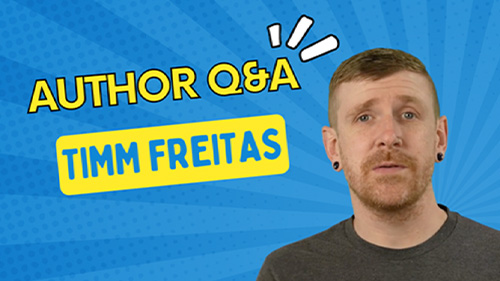
Author Q&A with Timm Freitas

Author Q&A with Timm Freitas

Want to learn more about author and Garden of English creator Timm Freitas? Tune into our new Author Q&A series! Learn who inspired to become a...

Read More
Six Word Memoir Activity

Six Word Memoir Activity

In this creative and reflective assignment, you’ll explore the art of powerful storytelling through just six words. You’ll examine examples of 6-word...

Read More
Sentencing Guidelines: Writing Wrongs

Sentencing Guidelines: Writing Wrongs

With an emphasis on close reading, analysis, and full-length essays, losing track of sentences is easy. Join Dr. Brandon Abdon, author of our AP®...

Read More
Teaching Students to Think Rhetorically About Statistics

Teaching Students to Think Rhetorically About Statistics

In AP English Language and Composition, we ask students to enter an ongoing conversation, craft an argument, and make deliberate rhetorical choices....

Read More
AP® Lang: Understanding a Line of Reasoning

AP® Lang: Understanding a Line of Reasoning

Guide students through an engaging activity that stresses the importance of the thesis & topic sentences to structure the line of reasoning. Students...

Read More
Read and Write Like and AP® Language Exam Reader

Read and Write Like and AP® Language Exam Reader

The Rhetorical Analysis Essay or FRQ 2 on the AP Language Exam is historically one of the most challenging parts of the exam. One reason is that the...

Read More
So You’re Teaching AP English Next Year? Start Here.

So You’re Teaching AP English Next Year? Start Here.

Congratulations—or maybe condolences? You just found out you are teaching an Advanced Placement® (AP) English class next year. Whether it’s AP...

Read More
AP® Language: Vocab Acquisition Template

AP® Language: Vocab Acquisition Template

This lesson provides strategies for predicting meaning, previewing texts, and making inferences about word meaning and vocabulary. Students will be...

Read More
Top 5 Takeaways From the 2023 AP® Language Exam

Top 5 Takeaways From the 2023 AP® Language Exam

While the 2023 AP English Language and Composition exam represents year 4 of assessment using the analytic scoring guide and year 3 of the changes to...

Read More
AP Language: Doodle Notes

AP Language: Doodle Notes

In this lesson(s), students will create “Doodle Notes” to showcase their understanding of one of the free response questions on the AP Language exam ...

Read More
Building Confidence and Diminishing Anxiety For the AP® Lang Exam

Building Confidence and Diminishing Anxiety For the AP® Lang Exam

As educators, we face a lot of criticism for “teaching to the test.” While our goal as AP Lang teachers is to help our students become great writers,...

Read More
AP Language: Teaching the MCQ

AP Language: Teaching the MCQ

With 45 questions in an hour, four answer choices per question, it’s understandable why the multiple-choice section can be intimidating.

Read More