


 View Cart
1 min read
Mastering Abstract Concepts in AP Social Studies for Exam Success
AP Social Studies courses ask students to do something uniquely difficult: think with big,universalideas while working with very specific...

3 min read
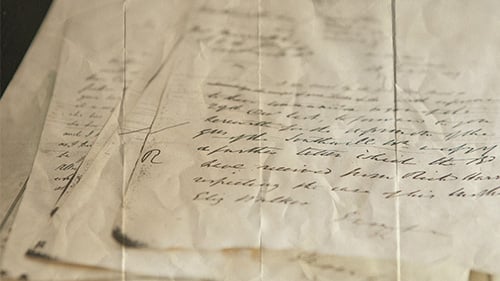
Primary sources provide students with a personal window into the past, enabling them to view history as human stories rather than a list of facts. They also strengthen critical thinking as students question authors, audiences, and purposes instead of passively accepting a single narrative.
For AP Social Studies, this is not optional: success on SAQs, DBQs, and LEQs depends on sourcing, contextualization, and evidence-based argumentation, all of which develop from sustained work with documents.

Traditional close reading often means heavy annotation and a series of comprehension questions that can quickly become tedious. To move beyond that, shift from “What does this document say?” to “What can we do with this document?”
Some key moves include:
Prioritize sourcing and perspective before content, asking who created the source, for whom, why, and with what bias.
Build in comparison, corroboration, and contradiction between sources so students practice thinking like historians rather than like test-takers.
Slow down with fewer documents and more time for discussion, writing, and reflection to deepen understanding instead of racing through packets.
Here are classroom-ready ways to make primary sources active, collaborative, and memorable.
Turn a document set into a puzzle students must solve.
Give students a small set of related sources (image, short text, chart) without full context and have them infer what is happening, who is involved, and why it matters.
Require them to support each inference with specific evidence from the documents, mirroring the kind of reasoning AP expects on DBQs.
How AMSCO helps: AMSCO AP U.S. History, AP World History, and AP European History titles embed document sets and stimulus-based questions that naturally lend themselves to this “history lab” approach, since students must interpret charts, maps, and excerpts to answer AP-style multiple-choice and SAQs.
Primary sources are ideal prompts for students to step into historical roles and grapple with conflicting viewpoints.
Assign each student or group a source and have them “become” its author, then stage a town-hall, salon, or debate where they argue from that perspective.
Ask students to write short speeches, diary entries, or letters composed in the voice of the creator, citing lines from the original text to justify their choices.
How AMSCO helps: AMSCO chapters often juxtapose contrasting voices—such as reformers and opponents, imperial powers and colonized peoples—alongside guiding questions, making it easy to turn those into perspective-based debates or structured academic conversations.
Students often connect more readily to images, graphics, and political cartoons than dense text alone.
Use “See–Think–Wonder” or similar strategies with photographs, maps, and cartoons to slow students down and push them from observation to interpretation.
Pair a short written source with a related visual and have students explain how the two reinforce or challenge each other, supporting claims with evidence from both.
How AMSCO helps: AMSCO programs frequently incorporate political cartoons, graphs, timelines, and maps tied directly to unit content and skill-based questions, allowing students to practice the same integrative analysis they will see on AP exams.
Stations turn document analysis into a movement- and talk-rich activity rather than a solitary task.
Set up stations around the room with different types of sources: a speech excerpt, a chart, a cartoon, a letter, etc.
Have groups rotate, adding annotations, questions, or claims at each station, then synthesize what they learned into a timeline, cause-and-effect chain, or argument.
How AMSCO helps: Because AMSCO units offer multiple stimulus types and AP-style questions aligned to each topic, teachers can easily break these into station tasks, with each station focusing on a different historical thinking skill or reasoning process.
Giving students creative tasks anchored in evidence keeps the rigor while boosting engagement.
Invite students to construct a narrative (short story, diary sequence, or storyboard) grounded in a cluster of primary sources, requiring direct quotations or references as proof.
Use strategies such as continuum lines (“most democratic” to “least democratic” documents) or “primary source sandwiches” (brief context, document excerpt, student explanation) to scaffold argument development.
How AMSCO helps: AMSCO’s chapter and unit assessments include DBQ-style prompts, short-answer questions, and long-essay prompts, which can be converted into “mini-DBQs” where students first complete a creative product, then revise it into AP-formatted writing using the same evidence.
Perfection Learning’s AMSCO AP Social Studies materials are intentionally structured around the skills that primary sources develop and AP exams assess.
Key ways these resources support your instruction include:
Systematic skill scaffolding: AMSCO texts incorporate sourcing, contextualization, comparison, and causation throughout each unit, gradually increasing document complexity and task demands to match AP expectations.
Abundant practice with exam-style items: Stimulus-based multiple-choice questions, SAQs, DBQs, and LEQs built around primary and secondary sources provide practice with the same formats students will encounter on test day.
Flexible use with your own activities: Because every AP-aligned unit is rich in concise overviews, key concepts, and integrated source sets, teachers can easily repurpose AMSCO passages and visuals into the mystery labs, debates, stations, and creative tasks described above.
By deliberately pairing these kinds of engaging strategies with AMSCO’s structured AP skill progression, AP Social Studies teachers can turn primary-source work into a powerful engine for both deeper historical understanding and stronger exam performance.

1 min read
AP Social Studies courses ask students to do something uniquely difficult: think with big,universalideas while working with very specific...

1 min read
For many students, the most intimidating part of an AP® Social Studies exam isn’t the content—it’s the rubric.

1 min read
When most teachers—and students—think about a DBQ, they think about writing. And yes, writing the full essay is essential. But if that’s all we ever...

1 min read
Unlock the power of historical thinking and writing as you elevate complexity and engagement in AP History classrooms. Presented by experienced AP...

1 min read
Join AP experts Brandon Abdon, Colin Baker, and Bob Topping to discover scaffolded approaches to teaching the APUSH, AP Euro, and AP World History...

1 min read
This interactive webinar focuses on scaffolded approaches to the finishing touches necessary for higher-level success on the LEQ and DBQ portions of...

1 min read
Having taught AP® for 25+ years, it’s tempting, and entirely understandable, to want to not add to your workload to maintain your sanity and give...
1 min read
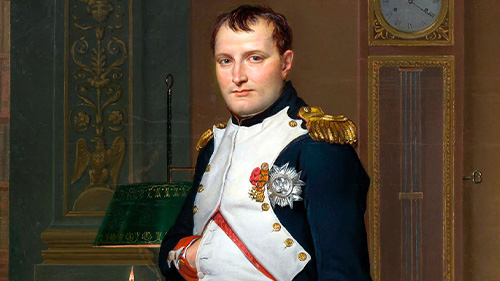
One of the best days I’ve ever had in the classroom is when we look at art.

1 min read
In this short video, veteran AP® World History teacher Dave Drzonek walks through a first-week lesson that turns note-taking into a structured...
1 min read
Every August, AP® History teachers face the same challenge. We spend the first day introducing the course, reviewing the syllabus, discussing summer...

1 min read
In the Course and Exam Descriptions (CED), College Board AP History courses are designed for students to “develop and use the same skills, practices,...

1 min read
Every August, I tell my students to download the AP History Course and Exam Description (CED). Almost every one of them does. Then, like many AP...