


 View Cart
 Dr. John P. Irish

1 min read
Bringing Primary Sources to Life: Engaging Ways to Teach Documents Beyond Close Reading
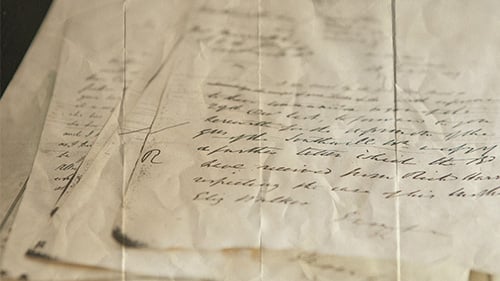
Primary sources provide students with a personal window into the past, enabling them to view history as human stories rather than a list of facts....
When most teachers—and students—think about a DBQ, they think about writing. And yes, writing the full essay is essential. But if that’s all we ever do with DBQs, we miss out on rich opportunities to build historical thinking, document literacy, and student engagement.
The Document-Based Question is already one of the most powerful tools we have. It asks students to do what historians do—analyze sources, identify bias and point of view, and construct arguments rooted in evidence. But it doesn’t always have to result in a full essay. You can break it down, remix it, and even perform it. Below are classroom-ready strategies organized into three instructional skill areas: writing, discussion, and document engagement.

These strategies strengthen the core writing skills students need for success on the DBQ: crafting claims, organizing arguments, and using evidence meaningfully. They’re especially helpful in scaffolding students before they take on full essays.
• Reverse DBQ (Build the Prompt)
Instead of giving students a question, provide a DBQ document set and ask them to develop the prompt themselves. This forces them to identify the major historical themes and patterns in the documents, encouraging synthesis and deeper analysis.
• Thesis Speed Dating
Have students draft thesis statements in response to a DBQ prompt, then rotate in quick one-on-one feedback sessions. Peers evaluate the clarity, defensibility, and line of reasoning. This makes thesis practice fast, fun, and iterative.
• Document Sorting or Ranking
Students read a DBQ set and sort the documents into analytical groupings—social, political, economic; support vs. oppose; long-term vs. short-term causes. Alternatively, have them rank documents by usefulness or reliability. These exercises prepare students to structure their body paragraphs and organize arguments.
• DBQ Rewrites with Peer Feedback
Instead of starting from scratch, have students revise an old DBQ—focusing on improving the thesis, sourcing, or analysis. With peer review and targeted feedback, students learn from their earlier mistakes and build writing stamina without the pressure of a new prompt.
• Mini-DBQ Bellringers or Exit Tickets
Use a single DBQ document at the start or end of class. Ask: “What’s the author’s argument?” or “What context shaped this source?” These small, frequent reps help students sharpen sourcing skills and keep DBQ analysis fresh.
These approaches emphasize speaking, listening, and using evidence in real-time conversations. They’re ideal for increasing student voice, argument practice, and collaborative analysis.
• Socratic Seminars
Assign a subset of DBQ documents to small groups, along with a central historical question. Students lead the conversation using evidence from the documents to explore multiple perspectives. This builds confidence in using sources and making nuanced claims.
• Historical Debates
Divide students into teams and assign them opposing sides of a question (e.g., “Was the New Deal effective?”). Students must use the DBQ documents to support their case and respond to counterarguments. This format builds argumentation and historical empathy.
• Socratic Trial (Documents as Witnesses)
Turn the classroom into a courtroom. Students play the role of DBQ documents as “witnesses,” while others serve as prosecution and defense. For example, try this with a prompt about dropping the atomic bomb. Each “witness” must speak from the point of view of their document, making sourcing and POV central to the activity.
• Panel Interviews
Each student adopts the identity of a document and sits on a panel. The rest of the class asks them questions about their historical moment, perspective, and motivations. This playful and theatrical format brings documents to life while reinforcing contextual and rhetorical understanding.
These methods focus on building student comfort with the documents themselves—especially sourcing, point of view, context, and complexity. They’re excellent early-year strategies or as engaging alternatives to full essays.
• Jigsaw the Documents
Assign each student (or group) one document from a DBQ set. After analyzing it closely, they become the “expert” and teach the rest of their group (or class). This promotes ownership and careful reading, and helps students build the habit of sourcing and contextualizing before writing.
• Gallery Walk
Print DBQ documents and post them around the classroom. Students rotate in small groups, reading each source and responding to guiding questions. You can also use color-coded sticky notes for sourcing, POV, or grouping. This low-pressure activity gets students out of their seats and into the documents.
Each of these strategies reinforces the core habits of the DBQ—reading critically, sourcing thoughtfully, and constructing historical arguments. But just as importantly, they bring energy, voice, and variety into your classroom.
By breaking the DBQ apart into writing, speaking, and analysis components, you allow students to build confidence one step at a time. These activities are especially helpful for supporting students who may struggle with writing but excel in discussion, role-play, or small group collaboration.
So next time you open a DBQ set, consider mixing things up. Whether students are speed-dating their thesis, walking the gallery, or channeling the voice of a labor reformer on a witness stand, they’re not just preparing for the exam—they’re learning how to think like historians.
1 min read
Primary sources provide students with a personal window into the past, enabling them to view history as human stories rather than a list of facts....

1 min read
Unlock the power of historical thinking and writing as you elevate complexity and engagement in AP History classrooms. Presented by experienced AP...

1 min read
AP Social Studies courses ask students to do something uniquely difficult: think with big,universalideas while working with very specific...

1 min read
Join AP experts Brandon Abdon, Colin Baker, and Bob Topping to discover scaffolded approaches to teaching the APUSH, AP Euro, and AP World History...

1 min read
For many students, the most intimidating part of an AP® Social Studies exam isn’t the content—it’s the rubric.

1 min read
This interactive webinar focuses on scaffolded approaches to the finishing touches necessary for higher-level success on the LEQ and DBQ portions of...

1 min read
One of the best days I’ve ever had in the classroom is when we look at art.

1 min read
In this short video, veteran AP® World History teacher Dave Drzonek walks through a first-week lesson that turns note-taking into a structured...

1 min read
Having taught AP® for 25+ years, it’s tempting, and entirely understandable, to want to not add to your workload to maintain your sanity and give...

1 min read
Every August, AP® History teachers face the same challenge. We spend the first day introducing the course, reviewing the syllabus, discussing summer...

1 min read
Every August, I tell my students to download the AP History Course and Exam Description (CED). Almost every one of them does. Then, like many AP...

1 min read
In the Course and Exam Descriptions (CED), College Board AP History courses are designed for students to “develop and use the same skills, practices,...