


 View Cart
1 min read
Free Choice Reading for Engagement and Academic Success
Join Michael Guevara to discuss a strategy for letting students choose their own books to engage them in more texts. The books in this video were...

1 min read

I don’t know about you, but I hate grading reading comprehension questions. First of all, the answers usually could be “borrowed” from websites like LitCharts or Spark Notes so they don’t actually tell you if the students read or not. Secondly, just because a student can tell you what happened in a text doesn’t mean they really understand it. Finally, grading them is…well…boring.
While my senior class was reading one of my favorite books, Beartown by Fredrik Backman, I decided to try something different. My students, like most, are obsessed with social media. Therefore, I blended something they love - social media - with something I love - knowing they truly understood a text - and it made for a really engaging and fun review of a reading assignment.
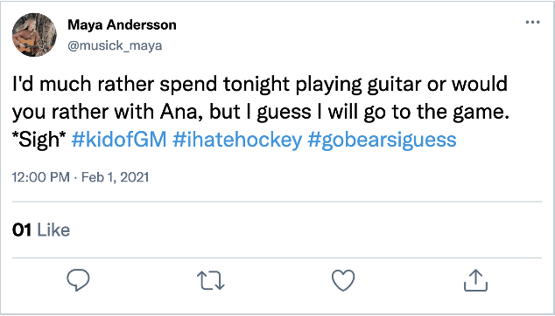
Students were randomly assigned a character from the novel and were responsible for creating three tweets that character would have posted during that section of the reading that was due. Students were expected to create a Twitter handle (username), choose an appropriate profile picture, write a tweet that alluded to a plot event from the section of reading complete with hashtags. Some took it a step further and created replies from other characters.
If you wanted to do this digitally, you could use a Tweet generator like Tweetgen. If you’d prefer to do this assignment on paper, you can find templates online to print. Using the Tweet generator is nice though because they put their tweets in a shared document that I was then able to project for all the class to easily see.
When they were finished creating their posts, they shared their tweets with the class, explaining why they made the choices they did. I found it interesting how many students were quick to comment things like “That sounds just like Maya” or “Amat would never say that; he is not arrogant.” I had to do very little in terms of correcting any misunderstandings because the students did it for me! Also a plus, I was able to give feedback as they presented, so there wasn’t a stack of boring comprehension questions to grade that night. When the bell rang at the end of class, I knew where I needed to begin the next class period because I knew exactly what they understood. It is a win-win!
.jpg?width=1440&height=450&name=ProductPageBlogButtons%20(1).jpg)

1 min read
Join Michael Guevara to discuss a strategy for letting students choose their own books to engage them in more texts. The books in this video were...

1 min read
The end of summer can bring up many anxious feelings. One of the most prominent is ensuring our classrooms are set up perfectly before the school...

1 min read
In this creative and analytical lesson, students will explore character development, relationships, and key events in a literary text by crafting a...

1 min read
Laura Kebart will help you connect novel studies to cross-curricular goals, enhancing engagement without sacrificing core skills. Watch the webinar...

1 min read
Students often rely on summaries as a shortcut to understand literature. While summaries help review the plot, they flatten storytelling into a list...

1 min read
“Hey… hi… hello, can you hear me? Can you [take your earbuds out], [put your head up], [talk with a partner], please?”
1 min read
Code-switching is changing something about yourself to fit a certain situation or audience. The way you might talk to your friends versus talking to...
1 min read
It’s not very often that TV shows or movies come before the book version, but it does happen sometimes! The art of writing is alive in visual media...

1 min read
If you’ve ever waited longer than you thought humanly possible for a complete sentence to appear during a writing assignment (only to discover...

1 min read
If you teach grades 6–12 ELA, you know the squeeze. You are expected to move students toward sophisticated analysis of theme, rhetoric, structure,...
1 min read
For most of the past year and half, I have spent most of my waking hours querying or obsessing over querying literary agents for my young adult novel

1 min read
Being a teenager means a lot of things, but starting to date and get into romantic relationships or friendships sticks out as a huge milestone. The...