


 View Cart
1 min read
Rhetoric Meets Remedy: Showcasing Student Success
Imagine your classroom transformed into a gallery, a science exposition, or a story-telling stage, where students proudly display their work while...

3 min read

“Hey… hi… hello, can you hear me? Can you [take your earbuds out], [put your head up], [talk with a partner], please?”
The life of a teacher bothering a student to engage in conversation is exhausting, but what if I told you that with a little preparation of materials and a solid routine for collaborating in discussions, this student would be meaningfully contributing to conversation soon?

Depending on what type of conversation you need or how quickly you want the help, these activities can spark meaningful conversation and an engaged student.
More Structured Whole-Class Discussion
The steps include:
Students will talk to each other, but they have to know that the teacher is serious about holding them accountable. Being consistent with the strategies you use and the expectations are key. Also, getting them off their phones is probably the biggest part to making these ideas work.
In my state, Iowa, we have a new law this past school year (2025-2026) that doesn’t allow phone usage during instructional time. This has improved the ability to incorporate structured conversation in my classroom.
Regardless of your state’s laws, students who know how to talk to one another will obviously be better off in real-world situations and in future academic or career settings.
Jennifer Epping is a high school ELA and journalism teacher of 14 years who lives in Des Moines, Iowa. She has bachelor’s degrees in journalism and mass communication and English education from Iowa State University, and a professional certificate in book and magazine publishing from New York University. She spent some time in book publishing in New York and found her passion in the classroom helping students find their voices. She loves spending time with her wife, Amanda, and their one-year-old son, Elliott, while also diving into as many books as possible.
1 min read
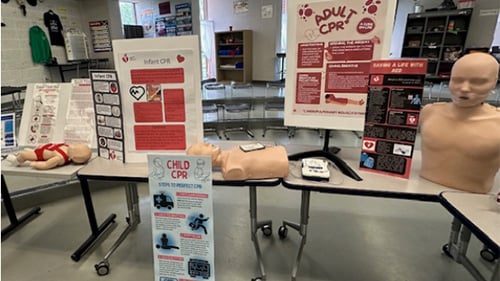
Imagine your classroom transformed into a gallery, a science exposition, or a story-telling stage, where students proudly display their work while...

1 min read
We’ve heard of Project-Based Learning (PBLs), which allows students to mostly have independent leadership through a task or project and creative...

1 min read
Several years ago, I began using a 4-point Student Engagement rubric for assignments that were either early in the knowledge acquisition period or...
1 min read
Join Laura Kebart (LanguageArtsTeachers.com) for a fun walkthrough of four strategies to keep your middle school ELA students engaged all year long!

1 min read
Students' favorite streaming services, movies, and video games are all packed with compelling storytelling. To get them more excited about reading, I...
1 min read
When the calendar gets crowded with winter concerts, makeup quizzes, assemblies, and general mid-year chaos, the idea of doing a full close-reading...

1 min read
Most of the time, grading a stack of essays feels like shoveling a pile of smoke for the weekend. Not only are traditional grading methods time...

1 min read
In my district, every nine weeks we ask our students at all grade levels to read a work independently and then demonstrate their knowledge of that...

1 min read
For this activity, students are tasked with creating an Instagram post imagining that their assigned vocabulary word was a person posting on social...
1 min read
In this creative and reflective assignment, you’ll explore the art of powerful storytelling through just six words. You’ll examine examples of 6-word...

1 min read
Laura Kebart (English Language Arts Teachers) shares strategies for 6-8 ELA teachers for creating rubrics that center student improvement. {%...
1 min read
Annotation is a life skill, especially for our college-bound students. Reading something with a purpose, a strategy to comprehend at a higher level,...