


 View Cart
1 min read
How to Use AI in the Math Classroom
A friend of mine is a vice president at a large construction company. Another is a software engineer. Like me, both received their education in the...

2 min read

We’ve all been there, a student brings you their attempt at a problem, and they ask you to find what they did wrong. You review it, can’t seem to locate the mistake, and instead pull out a clean sheet of paper and say “let’s start from the top and work it fresh.” Then you magically (in their eyes) arrive at the correct solution. Moral of the story: it’s harder to find the mistake than it is to work it correctly from scratch!
In the movie How to Lose a Guy in 10 Days, the advice columnist Andie (Kate Hudson) attempts to teach her readers about what NOT to do in a relationship. She illustrates with Ben (Matthew McConaughey) the common mistakes we sometimes make in relationships so that her readers can be aware of them and navigate relationships more successfully.

Don’t just show the correct approach. Show a common mistake:
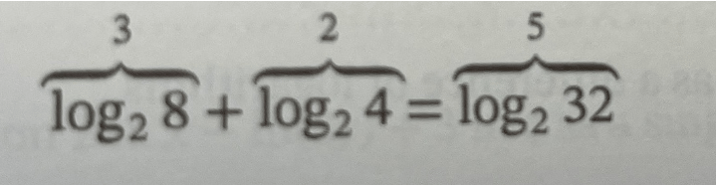
Correct (the sum of logs is the log of the product):
logb(a) + logb(c) = logb(ac)
Example: log2(8) + log2(4) = log2(32)
Beware of Common Mistake:
logb(a) + logb(c) ≠ logb(a+c)
Counter Example:
log2(8) + log2(4) ≠ log2(12)
Using examples in class with simple answers that students can hold up on their right hand if it’s positive, left hand if it’s negative, and the absolute value is the number of fingers. For example, if the answer is 3, that’s a right hand with three fingers, or if the answer is -4, that’s a left hand with four fingers. All students are asked to hold up the answer, and you can assess the entire class versus just assessing the one student called upon.
Find the exact value of (a) log381 (b) log5 (1/25) (c) log21
Answers (a) 4 (right hand, four fingers) (b) -2 (left hand, two fingers) (c) 0 (either closed fist)
Note on c: if a student holds up a 2 this is a common mistake.
Often when there could be more than one mistake, discourse is amplified.

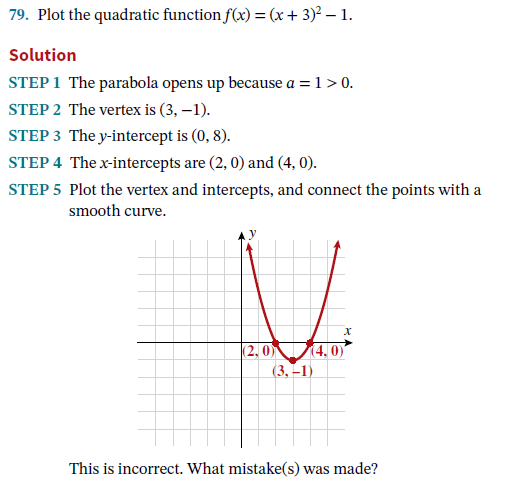
In this example, Steps 2 and 4 are both incorrect. . After discussion in which students share their thinking and ask clarifying questions, it is important to work (together) the same problem correctly so students can compare the steps when they are on their own. This process of metacognition (thinking through their thinking) helps to solidify a path forward.
When a student is assigned homework, work a few problems and keep getting them incorrect, they often give up. One psychological approach is if you can do #20 you likely can successfully do #1–19.
If you can somehow carve out the last ten minutes of class try a get-out-of-class-early problem. Assign say #1–50 odd, then pick an even one in the middle to have students work and bring to you when done. If correct they get out of class early, or they can sit on their phone. If incorrect, they go back to their desk and try again. In the last two minutes work the problem and students will try to figure out the mistake they made and take notes to help them later. Here is an example-: #19 is assigned for homework so #20 is the get-out-of-class-early problem:
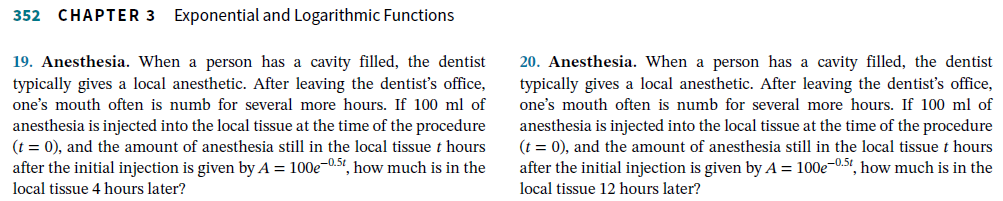
In my experience, after the first few weeks of this students who get it correct don’t actually leave early or get on their phone, they help others who have returned to their desks.
The next time a student brings their incorrect solution and asks what mistake they made—if you can locate the misconception, it will help them remember the common mistake and the correct approach.
 Cynthia Young is an American applied mathematician, textbook author, and academic administrator. Her research has included mathematical modeling of the effects of atmospheric turbulence on electromagnetic radiation with applications to laser-based communication with satellites. She is also the author of a series of textbooks on high school mathematics. She is the founding dean of the Clemson University College of Science.

1 min read
A friend of mine is a vice president at a large construction company. Another is a software engineer. Like me, both received their education in the...

1 min read
In today’s advanced math classrooms, rigor is accessed through multiple representations. Join this dynamic edWebinar designed for AP and Honors math...

1 min read
Any distance runner will tell you that preparation for a longer run like a 10k or marathon incorporates not only distance training, but sprints as...

1 min read
Given that lately I am as burnt out as they come, I found myself wanting to do something unusual.

1 min read
As spring break approaches, maintaining classroom control can feel like a herculean task. Survive the 'spring fever' with these expert classroom...

1 min read
The classroom community…is it worth the time and energy? This is not a rhetorical question. The answer is yes.

1 min read
When I think about the success stories of my middle school emergent bilingual learners, I can’t help but smile. What about you? Sure, there were...

1 min read
I must have convinced you of the need to build a classroom community from my first post because…you’re here. Or maybe you already know that you need...

1 min read
Back in the days before television screens were flat, before we had televisions in every room of the house, before crazy high screen resolutions let...

1 min read
Rainbow flags fly, the face tattoos are at Target, and every brand around has brightly colored versions of their products. Oreo, Nike, and Disney go...

1 min read
Congratulations! You’re well into the first semester now. You’re developing new and solid relationships with your learners and creating a classroom...

1 min read
Test season doesn’t have to work against your multilingual learners. It can be a powerful way to protect them, affirm them, and expand their...