


 View Cart

5 min read

Organization and clear communication are essential features of any classroom—really, any functional relationship. Staying on track, pacing a course, meeting curriculum standards, and fulfilling school expectations can be difficult for even the most experienced educators. I recently spoke with a 26-year veteran teacher who told me that he still struggles to remember where he was in his curriculum from one year to the next. As teachers, we are constantly managing and juggling dozens of responsibilities; sometimes it feels impossible to keep up with all of them.
For more than a decade, I have used a simple organizational tool that has helped me manage my classes, simplify my planning, and handle some of the ther craziness that can overwhelm a teacher’s day: the Daily Overview. Although they initially take some work to create, Daily Overviews can organize instruction, increase student accountability, improve communication with parents, and make lesson planning much easier.

What Is a Daily Overview?
I can't take credit for this idea. My colleague Timm Freitas created Daily Overviews in 2011 while we were working together at Blackstone Valley Tech, after his teacher’s aide prompted him to develop a more organized and effective instructional method for a group of struggling students. I adopted the tool in 2012 when Timm and I created our AP Literature and AP Language programs.
A Daily Overview is a single document, posted where students can always find it, that contains everything they need for that day's lesson: the agenda, the objectives, homework and upcoming due dates, and any notes, readings, directions, or models the lesson requires. It functions as a lesson plan, a make-up work system, a parent communication tool, and a permanent record of your course, all in one place.
The concept is simple: a Daily Overview is a one-stop shop for all that we do in class.
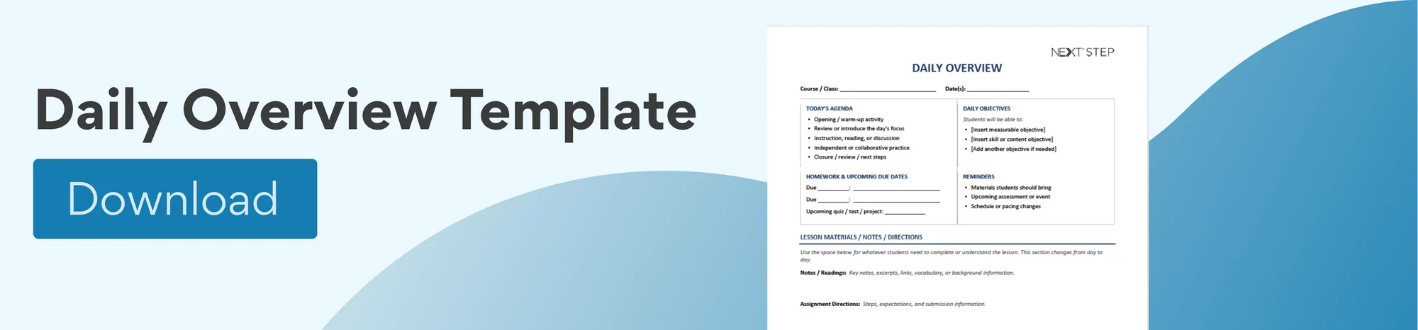
What Goes on a Daily Overview
At minimum, every overview I create contains:
-
The daily agenda
-
Lesson objectives
-
Homework and upcoming due dates
-
Lesson Materials
Depending on the lesson, the Overview may also include:
-
Class notes and readings
-
Assignment directions and submission instructions
-
Writing models and worked examples
-
Discussion questions
-
Review materials and study guides
-
Vocabulary or background information
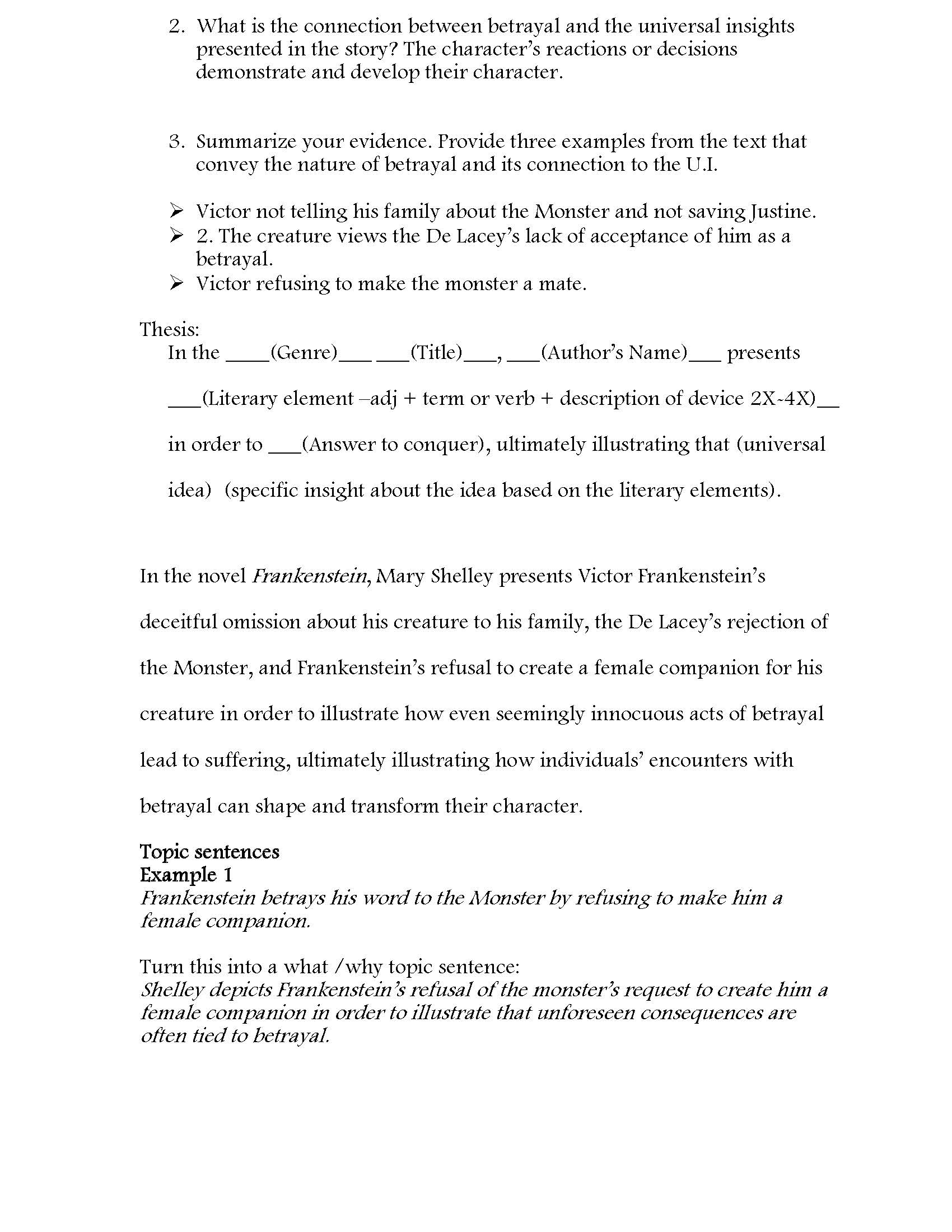
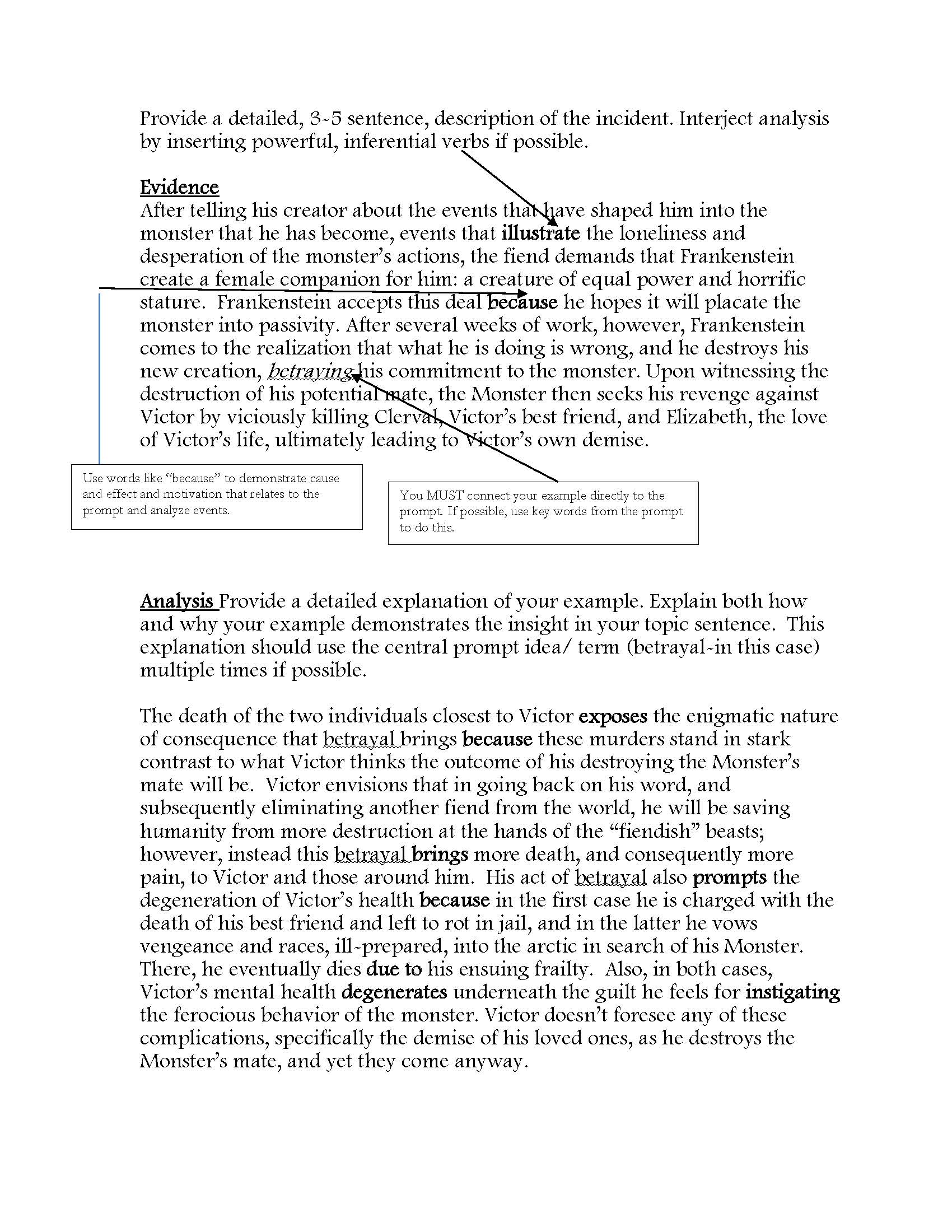
Here is what that looks like in practice. The Overview below comes from a recent AP Literature unit on Frankenstein.


Using the Overview for Absent Students and Make-Up Work
The Daily Overview works best when it becomes part of the classroom routine. I post every Overview to our class Canvas page and project it on the Smartboard during class. Students see the same document when they enter the classroom that they can later access from home. This also creates a record of what happened in class, which holds students accountable and provides a benchmark for subsequent years.
At the start of the year, I made it clear that students are responsible for accessing the Overview when they are absent. One of my biggest pet peeves is when students return from an absence, ask, "I was out yesterday. What did I miss?" and expect me to summarize what we covered in a 45- to 120-minute class in about 10 seconds.
My expectation is simple: students must first access Canvas and review the Overview. I am happy to answer questions about the work detailed there, but students have a responsibility to determine what they missed before asking me to reconstruct the previous day’s class for them.
The Overview doesn't replace the teacher; it gives students the information they need to take greater responsibility for their own learning.
How Daily Overviews Improve Parent Communication
Daily Overviews also give parents a concrete starting point for conversations about coursework. Early in the year, I explain the system and show parents what an Overview contains.
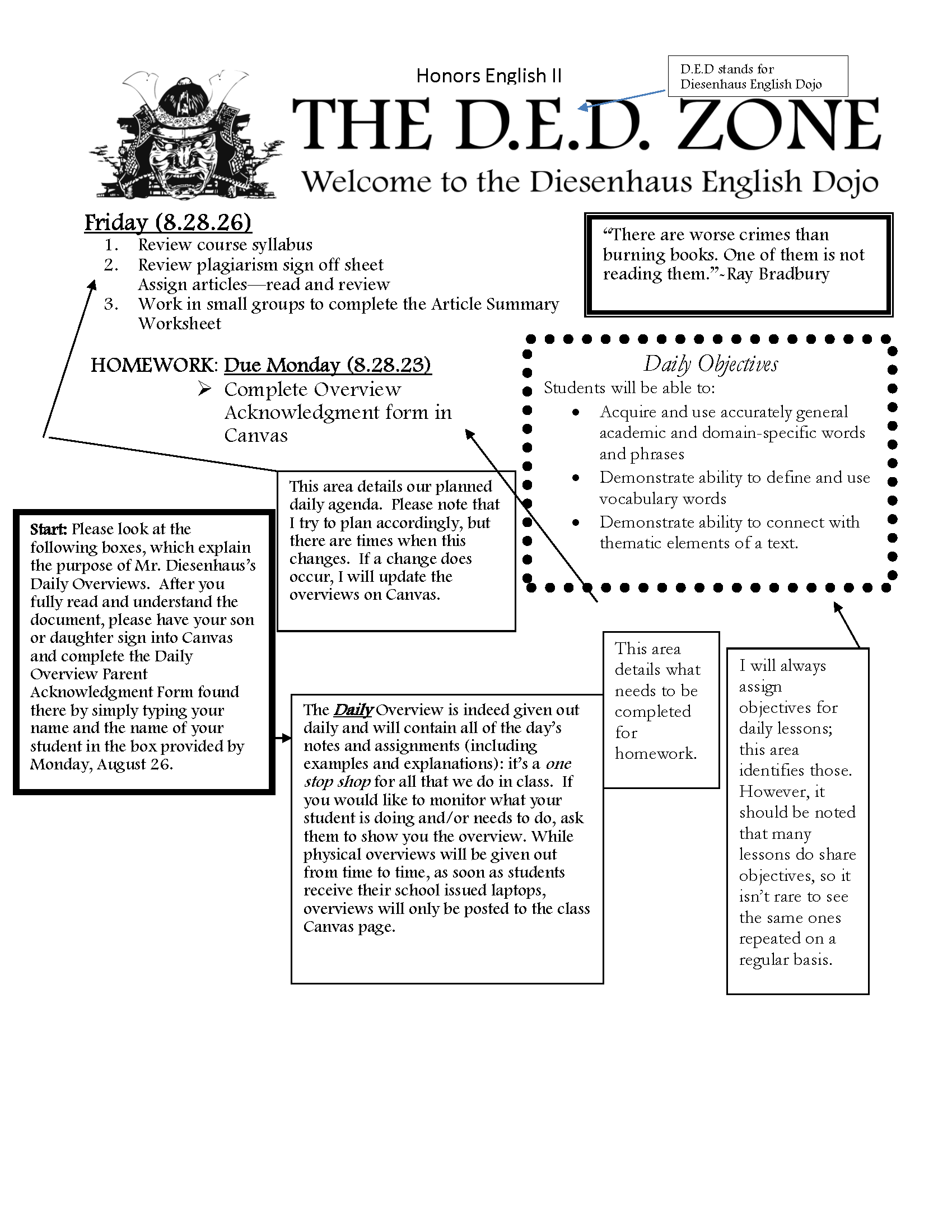
My first-week Overview does double duty: it runs a normal lesson while annotating each section so parents understand what they are looking at.
If parents want to know what we are doing, what assignments are coming up, or what their student should be working on, the Overview answers all three questions in one document.
My Overviews are housed within Canvas, and parents do not have direct access to my class page, so I ask them to have their student log in and show them the Overview. If your school's technology allows you to make Daily Overviews directly accessible to parents, I recommend doing so. It provides them with a window that allows them to view what is happening in the classroom.
Your Overview Becomes Your Lesson Plan
At this point, you may be thinking that creating a document like this every day sounds like a lot of work. Initially, it is. But the investment is worth it because the Overview eventually becomes the lesson plan itself. The agenda establishes the sequence of the lesson; the objectives identify what students should accomplish; and the notes, readings, models, examples, discussion questions, and activity directions provide the instructional framework.
Once I create an Overview, I have planned the class and created a permanent digital record of what was accomplished. This is when the initial investment pays off.
When I begin planning a lesson now, I never start with a blank document. I pull up the Overview from approximately the same point in the previous year's course and build from there. After several years of doing this, I often just need to adjust the dates, make necessary revisions, post the Overview, and my lesson is ready to go.
That doesn't mean I teach the same lesson every year. Quite the opposite. The old Overview gives me a benchmark. I can see what I taught, how I structured the lesson, and what came next. From there, I can keep what worked, revise what didn't, add new materials, change the pacing, or rethink the lesson entirely.
I sometimes leave notes to myself directly on an Overview about something I want to change the following year. I type these notes in red so they stand out when I return to the document months later. It is a simple system, but it prevents those moments when you vaguely remember wanting to change something and can no longer remember what or why.
After one full year, you have more than a collection of handouts; you have created a detailed instructional record of your course.
How to Create Your First Daily Overview
Start with what you need tomorrow. Trying to build a full system at once is daunting, and it isn't necessary.
-
Create a document with four basic elements: agenda, objectives, homework/upcoming due dates, and lesson materials.
-
Post it somewhere students can reliably find it. Use whatever platform your school already runs, whether that is Canvas, Google Classroom, Schoology, etc.
-
Project it during class. Students should be able to reference the Overview easily throughout class.
-
Refer to it when explaining assignments. This trains students to treat the Overview as the authoritative source.
-
Set the absence expectation. Students consult the Overview before asking what they missed.
- Save it. Next year, open the same Overview and start there instead of from scratch.
As you refine your course, your Overviews will evolve with it. You'll add examples that helped students understand a difficult concept, preserve strong models, revise activities that didn't quite work, and leave yourself reminders about changes you want to make.
Eventually, the Daily Overview becomes more than an organizational handout. It brings together lesson planning, student and parent communication, absent work, instructional materials, and a record of how your course has evolved.
Creating these requires an investment of time, but after more than a decade of using Daily Overviews, I don't have to wonder what I was doing at this point last year.
I just open the Overview.